Food Systems Podcast 88
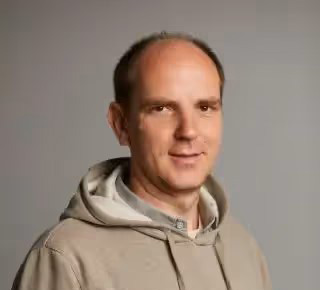
Interview with Dave Hughes
Friday, Nov 07, 2025
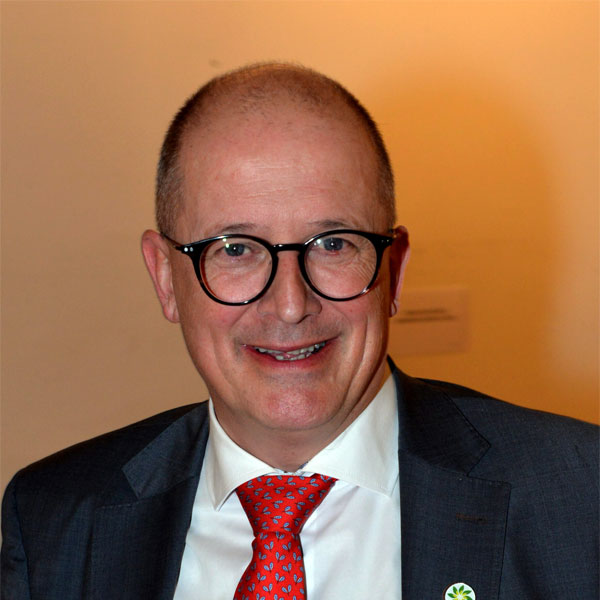
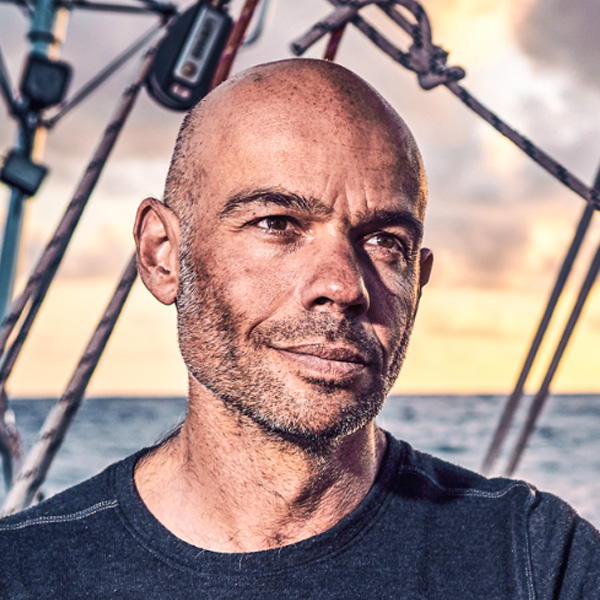
In this edition of the Food Systems Podcast, Alex Turk talks to Dave Hughes, Head Technology Identification and Evaluation for Crop Protection, Syngenta. They discuss innovation focus and progress, and deep dive into digital technologies, biological pest control and genomic techniques, highlighting the importance of innovation for Europe.

Here is a summary of the conversation.
You’ve described yourself as a “creature of the future” – why so?
I’m focused on the future. It takes a decade or more to develop new agricultural technology so what we work on today will hit a different world. Trying to predict the future is futile. The real goal is to think about the plausible range of potential futures and identify actions we can take now to influence the future.
You can try to spot things like signals of change and bundle them together and extrapolate them forward – but whatever you come up with is going to be biased by your own personal perspective. My perspective is influenced by the food security challenge.
How do you find innovations, and what do you spend your day doing?
There’s so much fantastic innovation out there, finding new innovation isn’t the problem; it’s working out which innovations we can actually support. At any time we’re supporting 400-500 scientific collaborations, so I spend most of my time communicating: talking to external innovators about technologies and talking to internal colleagues about their challenges, and then trying to connect those people together. So far this year, I’ve interacted with well over 100 different external organizations right around the world.
With the urgency of the Sustainable Development Goals’ targets, what are you focusing on over the next 5 years?
Climate change is a particular concern of mine, as tipping points and nonlinear responses could seriously compromise our ability to produce food. The SDGs are based on extremely complex challenges – things like infrastructure, investment, trade policies, and technology regulation all need to align before simple technical breakthroughs can take effect. However, there are many areas where breakthroughs in science and technology could seriously help. I’ll highlight three: digital technologies, which are fundamentally changing society and agriculture; pest control, which is essential, as about one-third of all planted crops are still destroyed by pests before harvest; and crop genetic optimization, which allows us to make small, specific, and precise changes to a crop’s DNA.
How do these digital technologies work in agricultural technology and how exciting is the progress?
Digital technologies help make farming more efficient, precise, and sustainable. Data from sensors in the field and from images taken by drones or satellites, which AI analyses, give farmers unprecedented understanding. This allows for precise delivery of inputs like chemicals and fertilizer, and the results are at least as good, with significantly fewer inputs.
Digital systems also hugely impact research: AI can spot meaningful patterns in highly complex datasets, so we understand complicated systems better. Finally, in our labs, robotic and autonomous systems have already automated almost every routine procedure, freeing up human scientists to focus on more creative, interesting, and difficult tasks. In research, AI can suggest new chemical structures or DNA sequences that have never existed before.
So, they’re good at the metadata. But will there always be a deeply human endeavour in science?
I believe so. I can’t imagine a machine coming up with something like quantum mechanics or the theory of relativity if they didn’t already exist.
Tell us about biological pest control, where you see exciting developments.
Pest control is currently dominated by synthetic chemicals – which are very good. However, pest control technologies are now diversifying and becoming more biological. I see parallels with the pharmaceutical industry, which has shifted from synthetic chemicals to biological molecules (proteins, antibodies, nucleic acids). In crops, we’re just seeing the very first products of this type coming onto the market but there is a technical challenge with delivery. We’re at a junction: will these products be judged as the first tentative steps in a revolution, or will they sink without trace?
Let’s move on to genomic techniques. How are they changing our crops and why do we need them?
The CRISPR-Cas system enables us to make small, precise changes to the DNA sequence of crops, the same kinds of changes that can happen naturally. It’s been used to introduce “input traits” like improved yields and pest resistance. And food quality: this includes better tasting, vitamin-enhanced, and healthier foods. I see a blurring of the boundary between nutrition and medicine, with foods designed to have health impacts beyond simple nutrition, like a tomato that reduces blood pressure.
You’ve said that criticisms of synthetic chemicals are slightly unfair. Will society embrace food tech in the same way we adopt medical advancements?
It does seem to me that we tend to value traditionalism over innovation when it comes to food and farming – the Golden Age Fallacy. Objectively, the quality of our food is much better and safer today than it was 100 years ago. If we had to feed 8 billion people using the technologies available in the1920s, that would be an environmental disaster. Innovation has fundamentally improved almost every other aspect of our lives, and yet it seems we remain fixated on turning the clock back on our food system.
Why is all of this important from a geo-economic standpoint, especially in Europe?
Europe is a critical global breadbasket. It’s crucial that the political climate encourages farmers to maximize their productivity in the most environmentally sustainable way possible. Innovation improves the efficiency of farming, producing greater outputs for fewer inputs, while also improving food quality and safety. Restricting access to new technologies, or delaying their implementation, comes with a significant opportunity cost. It’s in everybody’s interest to encourage the development and approval of superior, new technologies to displace older products.
Finally, do you need to be an optimist to do this job successfully?
It would be difficult to do this job if you were a pessimist. You have to reconcile yourself to the fact that roadblocks and disappointment and failure are never going to be too far away. My mindset is a bit more like a striker in a football team: I remember the occasional feeling when the ball hits the back of the net, and that rare occasion makes everything else worthwhile.

Dave Hughes
Dave Hughes is responsible for new technology identification and evaluation at Syngenta Crop Protection. His role is...see more

Alex Turk
Alex Turk has worked in television presenting live, recorded and Business TV from ITN, Channel 4 News...see more