Food Systems Podcast 91
Interview with Stientje van Veldhoven
Tuesday, Dec 09, 2025
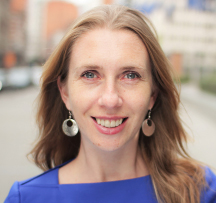
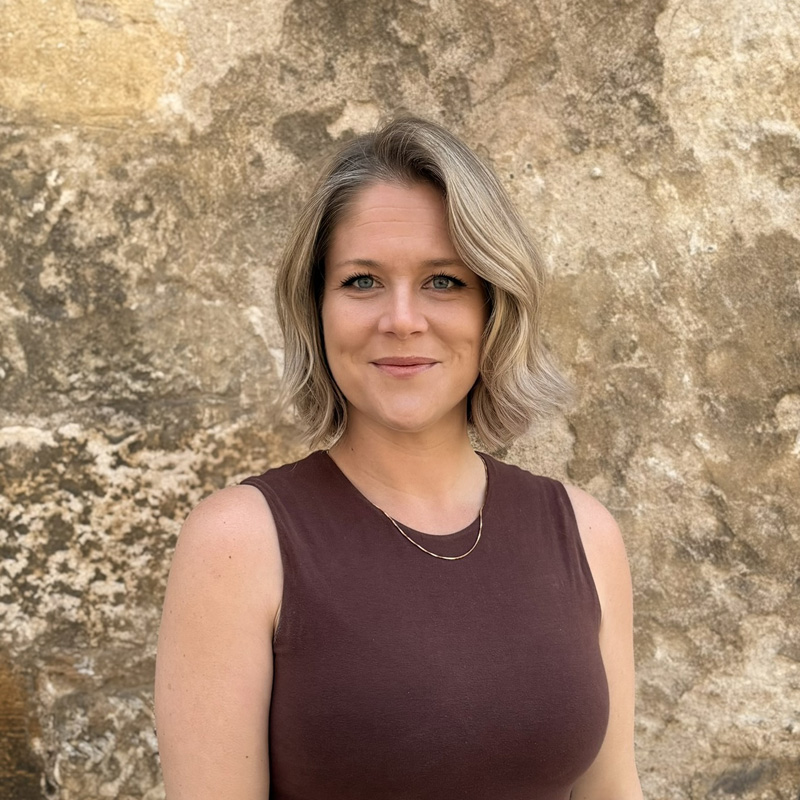
In this edition of the Food Systems Podcast, Alexandra Turk talks to Stientje van Veldhoven, Vice President and Regional Director for Europe at the World Resources Institute (WRI) and former Dutch Minister for the Environment. They discuss WRI’s work, insights from COP30, and the over-riding importance of coherent land use across all sectors.

Here is a summary of the conversation.
Could you give us a snapshot of the WRI’s work on food, land, and climate?
We’ve just celebrated our 40th anniversary. We’re a global research organisation focused on solving environmental challenges and our work spans climate, food, forests, water, cities, energy, and practical tools. We operate in 14 countries: we choose to be deeply embedded in middle-income countries because helping those countries pivot can help the world pivot toward the systemic change we need.
There are immense pressures on land use and agriculture. Agriculture already uses half of the world’s vegetated land and 70% of fresh water, drives tropical deforestation, and generates around a quarter of global emissions. What happens if population and consumption trends rise dramatically? At some point it simply won’t work, so we focus on solutions that help us use land much more intelligently.
How do you view the main outcomes of COP30? Can you give us the good news and the bad news?
I’ve been at around 15 COPs, and I’ve found that the expectations are huge, and each one feels as though it didn’t deliver as much as the world needs. On the other hand, every step counts, so we have to keep that in mind.
It’s critical we have a forum like the COP to move things forward. This COP showed again how hard it is for countries to agree a clear global roadmap for phasing out fossil fuels, and that is absolutely essential. But the lack of overall consensus can hide the fact that many countries are aligning and moving forward.
Outside the negotiation rooms, I was encouraged by how central nature has become. Nature, climate, and economic stability were treated as one agenda. We saw steps on forest protection and adaptation finance, and Brazil launched roadmaps on fossil fuels and deforestation. It’s early days, but if these plans become credible and inclusive, we may look back on COP 30 as a turning point toward a more realistic and nature-centred transition. Progress is slow, but it is progress.
WRI often stresses the need for Europe to move from intention to implementation. What drivers will help Europe make that shift?
We should all try to see that everything connects back to land: agriculture, nature, energy, diets, forestry. We only have limited land available. Europe already uses too much land: we rely heavily on land abroad, creating a “land deficit” of around 400 million tonnes CO₂ per year. That’s roughly the annual emissions of Australia, Brazil, or Mexico. It weakens our resilience and strategic autonomy and drives deforestation elsewhere.
We should think about how we use our land strategically, and efficiently and effectively. Importing wood for electricity, for example, creates land pressure outside Europe. And even small dietary shifts, like moving from beef to chicken, can free up substantial amounts of land for nature restoration or more extensive production. The key is steering our policies and incentives towards land use, and in ways that work for farmers. If it doesn’t work for farmers, it won’t work for anyone.
And when we think about farmers specifically, what solutions can support real progress?
Healthy soils and ecosystems are the hidden backbone of Europe’s economy, not just of farming but of many other services. Yet we don’t treat them that way. We need to rethink how we use land for energy. For example, nearly half of Europe’s harvested wood goes to bioenergy, even though those materials could stay in the loop much longer in a circular economy. More coherent policy would give farmers a clearer financial framework, especially when a new generation takes over – which tends to be when major investment decisions are made.
We need tools, we need data. Data transparency is the foundation for real change. If we understand the ecosystem services land provides, and if we integrate that with AI and better measurement, we can make sure that incentives and investments align with long-term strategic land-use and provide stability for farmers.
How can better measurement of soil carbon, nutrient flows, and biodiversity support implementation and underpin more strategic land use?
We have always been a data organisation. People may know our tools Aqueduct or Global Forest Watch; we’re integrating data into Nature Watch, which uses satellites and AI to monitor change in a very granular way, down to the growth of individual trees.
For carbon farming, we have to measure at the field level to reward farmers accurately. The same goes for biodiversity and soils: tracking vegetation, soil condition, and forests together helps us see what works, where, under what conditions. AI and real-time monitoring are making that possible. Better data turns complex systems into practical decisions that work in different conditions, and we avoid rules that assume one size fits all.
Finally, as 2026 approaches, what would be your New Year’s wish?
If I had to say it in one sentence: let’s all look across the silos. Land use is becoming a defining challenge. Agriculture, forestry, cities, nature – they all compete for the same space. If we align our incentives and think about land stewardship as a whole, we can move from continually eroding our ecosystems to a positive cycle that restores them.
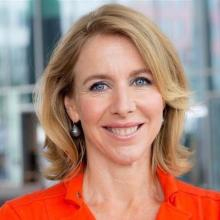
Stientje van Veldhoven
Stientje van Veldhoven is the Vice President and Regional Director for Europe for the World Resources Institute...see more
She has also been a Member of Parliament, an international diplomat, representing the Dutch government in the European Union in Brussels and has been working with the European Commission DG research and development. Stientje has had longstanding involvement in environmental issues, especially related to climate change, energy, and the circular economy. Stientje is based in the Europe Regional Office in The Hague.
Stientje enjoys hiking, cycling, and running, reading, cooking, and beautiful music.
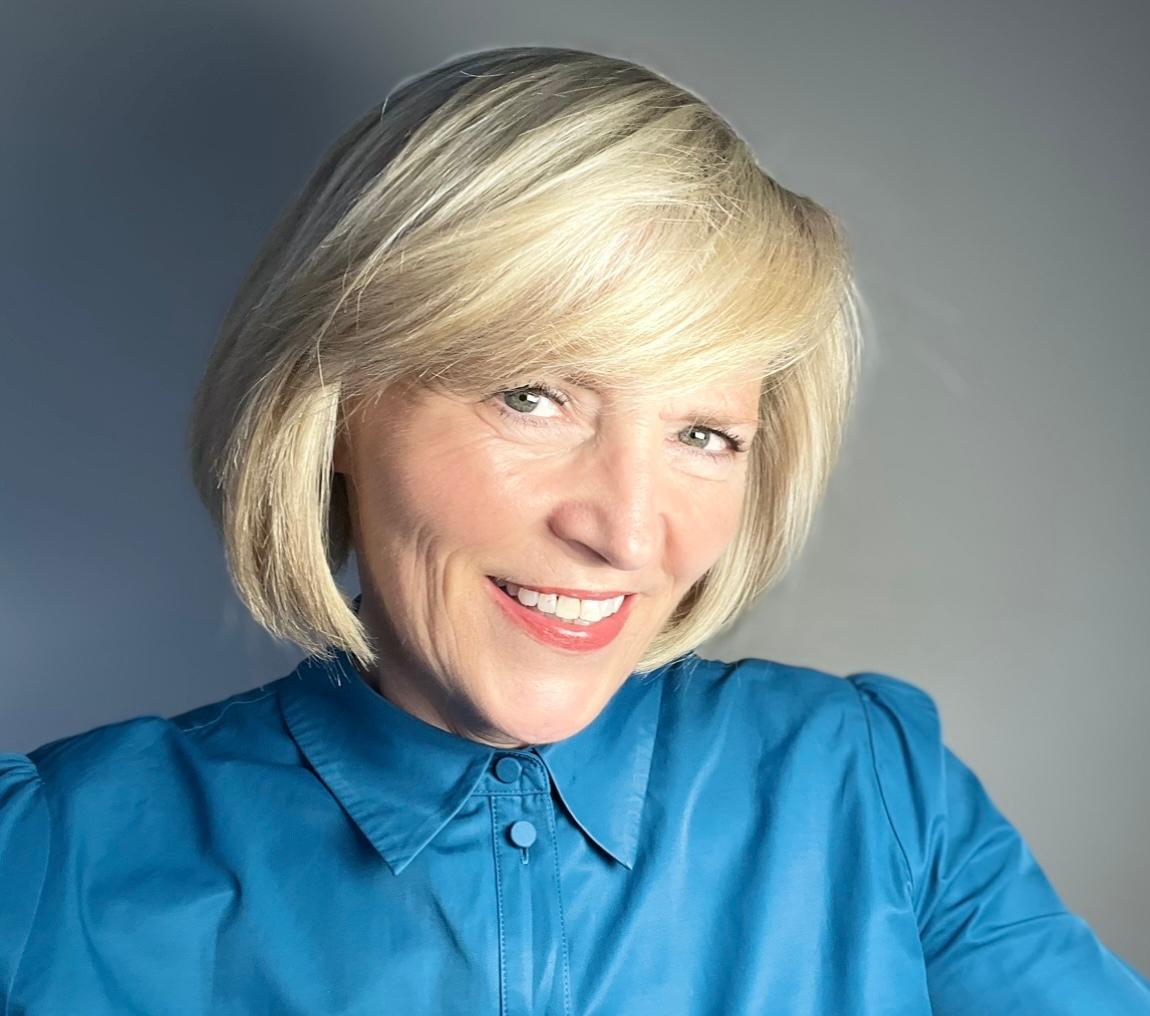
Alex Turk
Alex Turk has worked in television presenting live, recorded and Business TV from ITN, Channel 4 News...see more