Food Systems Podcast 92
Interview with Janez Potočnik
Friday, Jan 23, 2026
In our first podcast of 2026, Janez Potočnik, Chairman of the Forum for the Future of Agriculture, shares what’s on the Forum agenda for the year ahead with Rose O’Donovan. They discuss the urgent issues facing Europe and the Annual Conference agenda, from AI to “the end of the world as we know it”.

Here is a summary of the conversation.
Can you tell us about the Forum’s overall vision and focus for 2026 and give us a sense of the Annual Conference on April 14?
The world is changing rapidly, geopolitically and economically, and the Forum’s agenda reflects that reality. The Annual Conference will focus on four core themes: global change and its implications for agriculture, food, and the environment; financing the transition; land and soil management in Europe; and the role of artificial intelligence. Of course, we’ll also have inspirational contributions that bring new energy to the audience.
Land strategy is a major theme this year. Why is land management so critical now?
Land is under pressure from many competing demands, and too often it is viewed from a single-interest perspective. Europe lacks a serious, integrated land strategy. Through the Systems Transformation Hub, we want to bring institutions together to look at land and soil management systemically, considering all pressures at once. For anyone working in agriculture, soil and land management are fundamental, and this topic should resonate strongly with the conference audience.
Looking at the Conference agenda, the first session is titled “The end of the world as we know it.” What sort of discussions do you anticipate there?
The geopolitical situation is becoming more complex and less predictable. The relatively stable world we once knew no longer exists. Europe is struggling with how to position itself, particularly as transatlantic relationships are being questioned. Agriculture and environmental policy can’t be separated from these dynamics. Europe needs to move from a passive to a more active strategic role.
International cooperation is central to the Forum’s mission. What does that mean for the Forum’s role in our disrupted world order?
The Forum has evolved from a European-only focus to a genuinely international one. Through our Market outlook work, we collaborate with partners in Canada, the United States, Australia, and the European Union, and we aim to strengthen ties with the Global South. When formal international channels weaken, these kinds of partnerships are extremely important to re-establish them. And they drive us to focus on the issues from our own point of view.
Alongside your international scope, the Forum has regional conferences planned for 2026. What’s their role?
Both Dublin and Vilnius are on the cards for regional conferences. The regional events are important because many stakeholders feel detached from EU-level policymaking in Brussels. Regional conferences help bridge the gap. We can engage directly with regions and align the discussions with the political context, so we become more European in the broadest sense.
Going back to the Annual Conference, artificial intelligence features prominently in the agenda. How do you see the role of AI in the sectors the Forum is focused on?
AI is fascinating and fast-moving, and is bringing both good and bad. Our role is actually how to use the good and limit the bad. Within the wider debate and challenges of AI, we need to discuss how best to use the opportunities in food, agriculture and environment. It will be challenging, for sure.
Let’s move to research and innovation, topics very close to your heart and your background. In these difficult times, where is Europe going with research and innovation, and how can they strengthen us?
To start with the context, Europe’s competitiveness challenges have existed for decades; they did not start with the Green Deal. In the past we’ve failed to invest enough in knowledge and innovation, and we’ve lost some of our key technological breakthroughs. Another issue is that Europe is highly dependent on imports, including energy and critical raw materials, which makes us fragile. Using resources more sustainably is not a cost – it’s a competitiveness strategy. Research and innovation are central to that. We have an internal market, based on “four freedoms”, but it’s not functioning as an internal market. When we’re talking about research and innovation, Europe needs a “fifth freedom”: the free movement of knowledge, innovation, data, and researchers, which would remove some of the barriers we currently have.
What about the European Research Area? Could that be improved? What are the barriers there?
It has the same problems as the internal market. It’s good in principle but a lot of things don’t work, for example, pension rights for researchers moving countries. If you think about it, we educate our children, prepare them for the future. We need to do the same with individual nations. Empowering people through knowledge is the best way to secure Europe’s future and its values.
And the “fifth freedom” – is that idea gaining political traction?
Yes. The concept is increasingly recognised. The European Commission President has referred to the fifth freedom, and it’s now in the policy pipeline. It’s clear how urgent this is: Europe is strongest when we work together, and knowledge integration is essential for that.
It’s always interesting to hear your insights, and there will be plenty more at the Annual Conference on April 14.
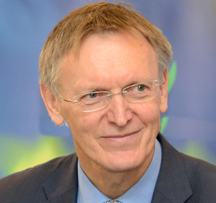
Janez Potočnik
Dr Janez Potočnik graduated from the Faculty of Economics at the University of Ljubljana, Slovenia. After a successful career...see more

Rose O’Donovan
Rose O’Donovan has been Editor of AGRA FACTS since March 2010, having previously served as Deputy Editor on the...see more