Food Systems Podcast 93
Interview with Justin Rose
Tuesday, Apr 07, 2026
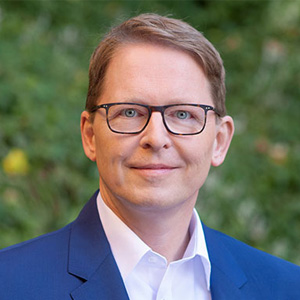
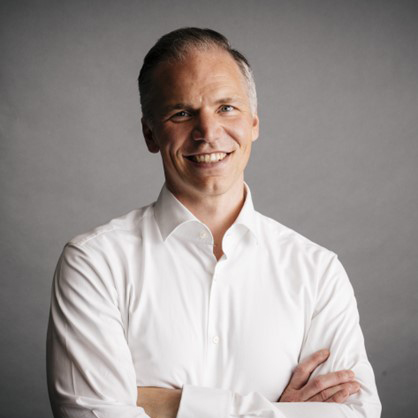
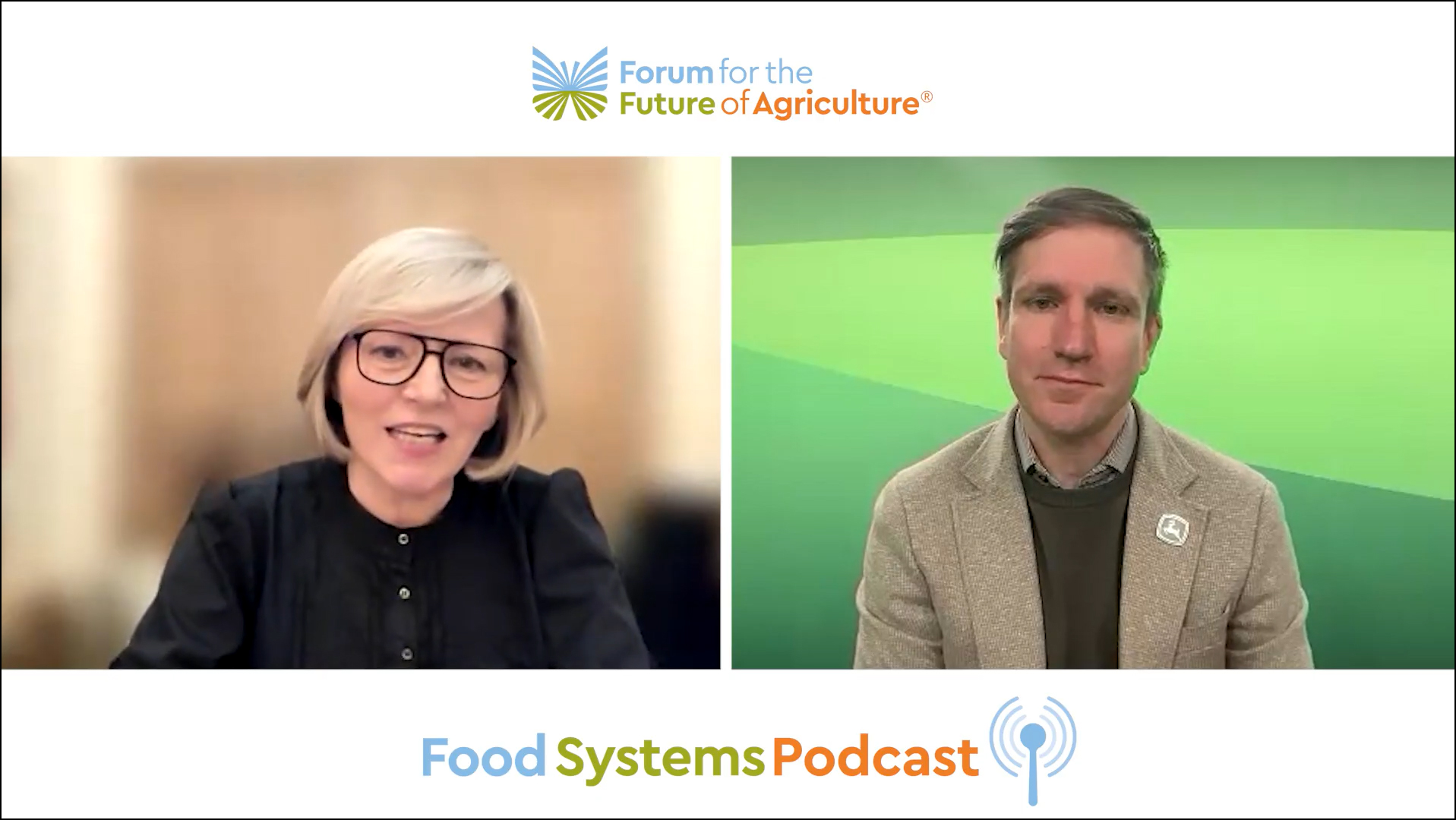
In this episode Alex Turk talks to Justin Rose from Deere & Company, ahead of him speaking at the upcoming Annual Conference. They discuss farm data and how AI-driven tools, flexible business models, and accessible technology can benefit farmers of all sizes.
Here is a summary of the conversation.
John Deere collects huge amounts of data from farmers. How do farmers tangibly benefit from that?
We’re very clear – the data is the farmer’s. Digital agriculture only works if it’s built on trust, transparency, and clear customer control. Our Operations Centre platform helps farmers aggregate data from across their operations to draw insights and create value – more yield, lower costs, streamlined workflows. We don’t extract the data, we store it, and farmers control who has access to it, and can delete it altogether if they choose. It is very much a “second crop” for farmers, and our job is to help them get the most out of it.
In terms of streamlining operations, how does the value of farm data come to life in the field?
At the basic level, it helps farmers manage large, dispersed operations in real time – tracking machinery and assets across fields many kilometres apart. But then it gets more complex and more exciting. Our See & SprayTM technology uses cameras and AI to distinguish weeds from crops along a wide boom and spray only the weeds – delivering a direct ROI for the farmer and significant sustainability benefits.
At the Annual Conference, you’ll discuss how data and AI can redefine what’s possible – for profitable farming, but also for climate-smart and nature-positive outcomes. How does it help the wider food system?
Take See & Spray as an example. A traditional machine drives across a field spraying everything with herbicide. See & Spray works across a boom of 30 metres or more, with cameras identifying each piece of foliage and spraying only the weeds. In real-world conditions across millions of acres, we’ve achieved 60-70% savings in chemical use.
Why does this require AI? Consider the scale. In Europe alone, in small grain cereals and oilseed production, there are around 23 trillion individual weeds to be found and killed every year – but only on 1-5% of total arable land. To target them without spraying the rest requires working at a superhuman level. That’s why you need AI – and why AI is a genuinely positive force for European agriculture.
Is the debate about who should own farm data – the technology providers, the farm owner and landowner – too binary?
Yes, I think it is. Our job is to create products and services customers find valuable enough to pay for. We invest more than $2 billion a year across our portfolio and we need to make a return on that investment. But the farmer is always in control – they can delete the data, or share it with whoever they choose.
Farmers are getting fewer and older. How do you adapt your business model?
In Europe, the average age of farmers keeps rising and many farms have no succession plan. We design our systems to be modular and scalable – farmers can adopt what helps them and build from there. And our precision upgrades retrofit programme ensures that precision agriculture technology isn’t only available on brand new machines for the wealthiest farmers. It can go onto machinery that’s 5, 10, 15, or more years old.
Innovation has a hefty price tag. How do you encourage younger, new players?
We’ve recently introduced in Europe our Solutions as a Service model – making cutting-edge technology available on a subscription basis. We provide the core equipment at a lower cost, with the technology as an optional extra. A customer success organisation monitors whether customers are actually using the technology and getting value. If they’re not, it triggers a feedback loop: do we need to make it simpler, easier, better supported? That loop builds confidence over time.
Is high-tech equipment inclusive for older farmers, and can it be a prohibitive entry barrier?
We find customers of all ages who sometimes struggle. Our inspiration has to come from products like Apple – simple, intuitive, seamless.
We do see it slows down adoption by, say, smaller family farms. That’s why the retrofit programme, the Solutions as a Service model, and investment in training are all focused on making technology as accessible to every customer as possible.
How do you adapt your technology to suit both Europe’s nature-positive agenda and other continents with production-first priorities?
All our customers need to be competitive, and the consumer will ultimately decide what they value. We build a technology stack that works globally but is customised locally. The Operations Centre is the same core system, but the emphasis shifts by customer and country – a South American farmer may focus on efficiency and cost; a European farmer may have specific regulatory requirements. The same system serves both.
You’re navigating a significant business model shift – from selling machinery to selling intelligence and software upgrades. How is that working?
It’s both complicated and simple. The simple part: ask one question – what’s the best thing to do for our customer? Keep them at the centre of everything and it rarely leads you wrong. The complicated part is that we’re a 190-year-old company now reaching customers we haven’t always engaged with before, and communicating a very different value proposition. There’s a lot of work to do. But helping customers be more productive, more profitable, and do more with less – that’s a clear North Star.
What do you hope to gain from the Forum’s Annual Conference on April 14?
Agriculture is a dynamic conversation – every day there’s something new. I can’t possibly know everything, so I’m constantly trying to understand what’s different and how we might apply it. There’s a lot of transformation ahead, and we want to be the trusted partner that farmers look to as they navigate it – and help them win.
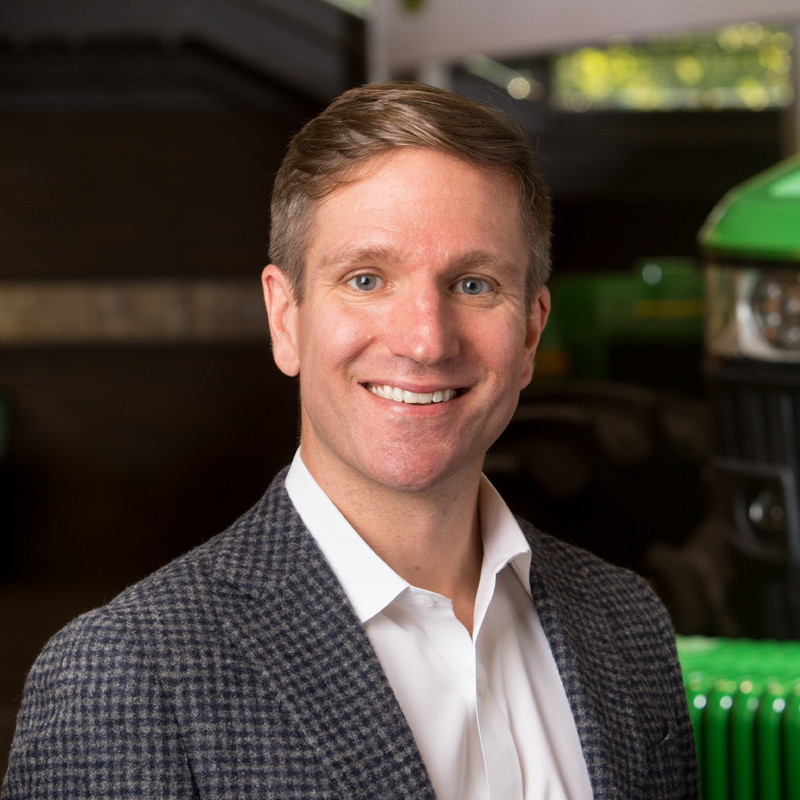
Justin Rose
Justin Rose is president, Worldwide Agriculture & Turf Division, Small Ag and Turf, and is responsible for...see more
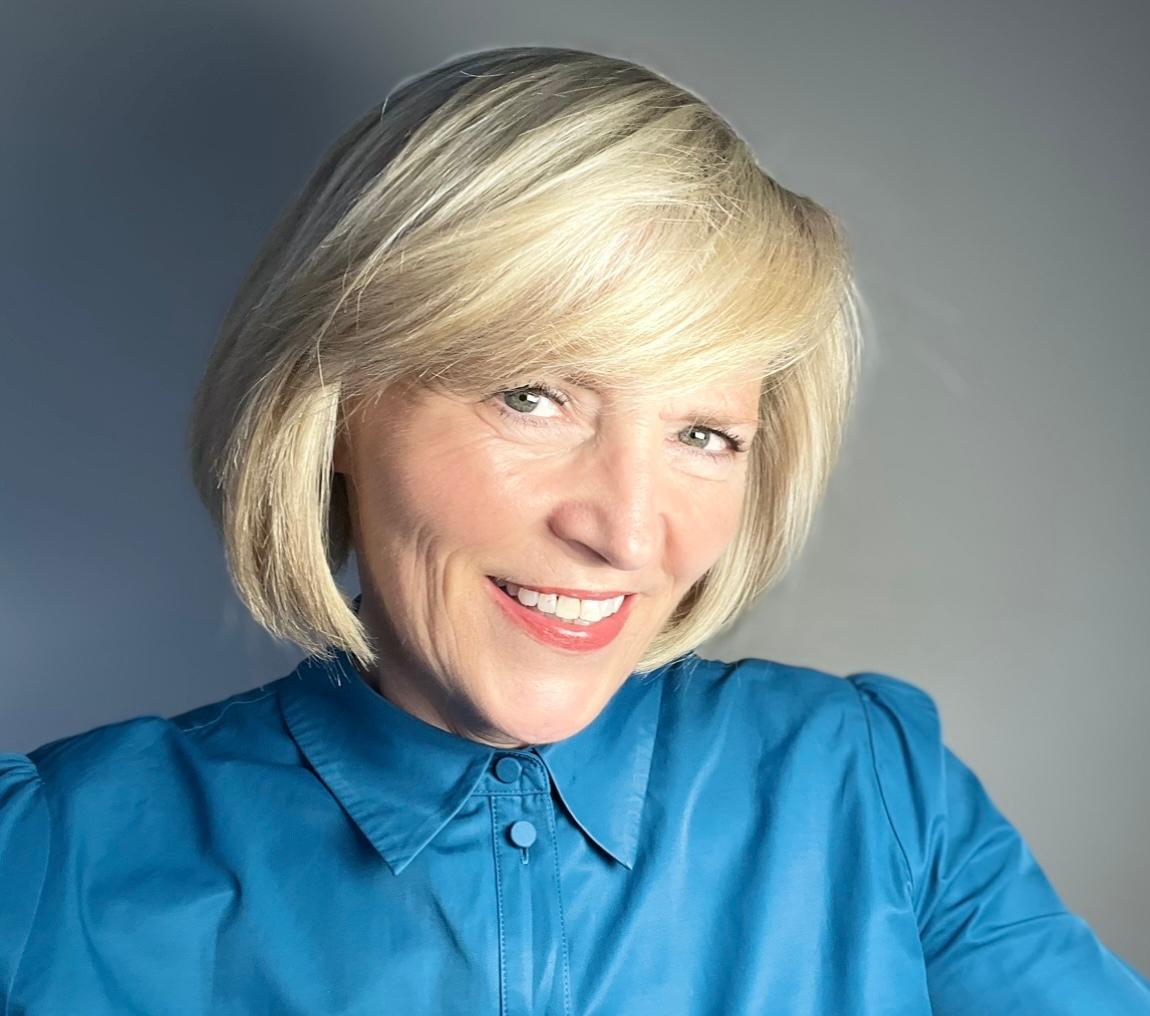
Alex Turk
Alex Turk has worked in television presenting live, recorded and Business TV from ITN, Channel 4 News...see more