Food Systems Podcast 108
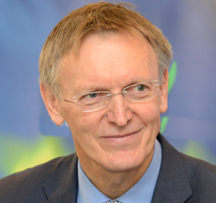
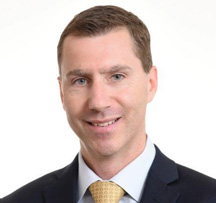
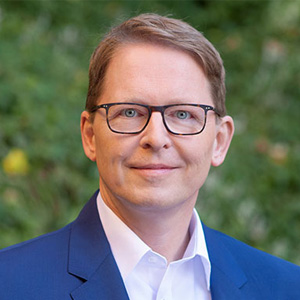
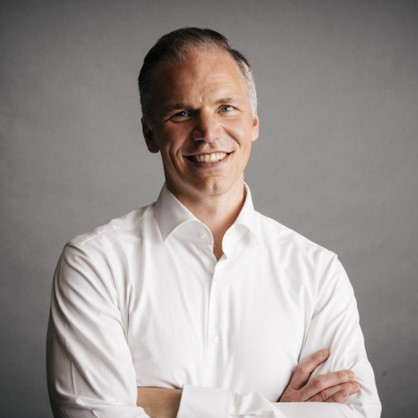
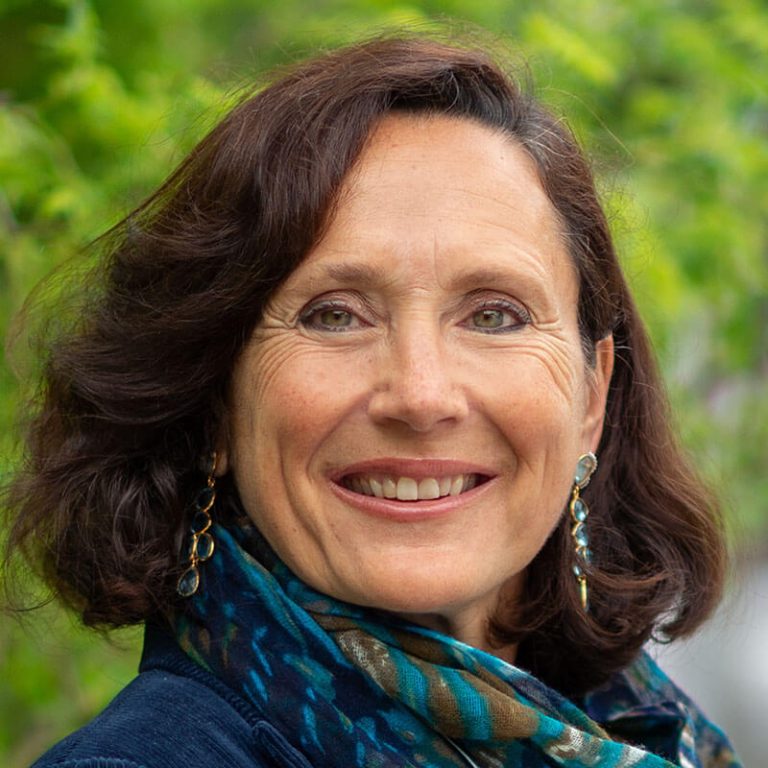
Interview with Professor Erik Mathijs
Tuesday, Nov 03, 2026
Healthy soils underpin food production, biodiversity, carbon storage and water management. Yet improving soil health takes time, requires investment and can expose farmers to costs and uncertainties long before the benefits become visible. How can those benefits be recognised, and how can the transition become economically viable for the people managing the land?
In this edition of the Food Systems Podcast, Alex Turk talks to Professor Erik Mathijs, Professor of Agricultural and Resource Economics at KU Leuven and coordinator of the EU-funded SoilValues project. Their conversation explores how soil health business models can help farmers capture more of the value they create, while sharing costs and risks more fairly with businesses, public authorities and wider society.
The following summary brings together Alex’s key questions and the main points from Erik’s responses.
Following the SoilValues final conference, what are the project’s main findings and the key messages listeners should understand?
Erik emphasised that improving soil health requires economic, financial, institutional and policy conditions that make better practices viable over the long term. Encouraging farmers to change their management is only part of the task.
The central imbalance is that healthier soils create benefits for many people, while farmers often pay first and wait longest for a return. Addressing this requires arrangements that distribute costs and risks more fairly. No single payment or financial mechanism can achieve that alone: finance, independent advice, reliable partnerships and public policies must work together over timescales that reflect the slow pace of soil recovery.
Healthy soils have benefits beyond food production. How can these different values be recognised, and who pays and benefits?
Erik suggests beginning with two questions: what value is being created, and for whom? On farms, healthier soils can improve productivity, profitability and resilience. Greater yield stability is particularly valuable, although improvements may take time to emerge.
The benefits extend throughout the economy. Food businesses gain more resilient supply chains, insurers can benefit from lower risks, and banks may see stronger repayment capacity. Society benefits from water regulation, biodiversity and carbon storage, while future generations inherit productive soils. Recognising these different beneficiaries provides a starting point for deciding how investment and responsibility should be shared.
What economic, financial and practical barriers prevent farmers from investing in soil health?
A farmer may understand the long-term benefits and still be unable to afford the transition. Costs arise immediately, while improved soil conditions, reduced input requirements and financial returns may take years. Farmers may also face temporary yield reductions, unfamiliar machinery investments and uncertainty about how their soils will respond.
These difficulties are compounded by limited access to independent advice, uncertain buyer commitments, complex reporting and changing rules. The barriers reinforce one another: a loan offers little reassurance without dependable income to repay it. Erik therefore sees hesitation as a potentially rational business decision. Support must reflect each farm’s financial capacity, available time and skills.
What mechanisms, partnerships and incentives could distribute the costs, risks and benefits more fairly?
Erik advocates a package of measures, starting with a distinction between ordinary business risks and the additional risks involved in changing a farming system. Partners should then consider which organisations are best placed to manage, share or absorb those risks.
A package might combine multi-year transition payments, advance payments to ease cash flow, longer-term purchasing agreements, guarantees or compensation for specific losses, and independent technical advice. The terms of these arrangements matter as much as the instruments. Farmers need a meaningful voice and a fair share of the value, so that they are not left carrying uncertainty while more powerful partners capture most of the benefits.
What is a soil health business model, and how does it work?
A soil health business model explains how maintaining or improving soils creates value, how the work is organised and financed, and how those responsible receive a fair share of the benefits. It considers who participates, who pays, who carries risk, how decisions are taken and how progress is measured.
Erik illustrates this with a Belgian example involving dairy farmers and local authorities. Biomass from nature areas, which authorities need to manage, is transferred to farms for composting and soil improvement. Making the arrangement work requires cooperation across different levels of government, technical advice and experimentation on farms. The example shows how business models can connect different needs, while also revealing the coordination involved.
What types of financial support, technical assistance and collaboration make these models work in practice?
Trust, skills and clear responsibilities are essential. Erik identifies three connected needs: financing the change, reducing additional risks and providing independent technical assistance. Early in the transition, farmers may need upfront support, practical guidance and protection against losses. Later, as outcomes become easier to verify, payments can increasingly reward results alongside market income and commercial finance.
The balance will vary between farms and locations. An approach suited to an early innovator may be unsuitable for someone with less capital, time or confidence. Trusted advisers and intermediaries are therefore important in organising partnerships, developing contracts and connecting farmers with finance. Their contribution creates lasting value and needs sustainable funding.
How can soil health business models remain financially viable beyond short-term projects and funding cycles?
Erik argues that initiatives should plan from the outset how value will reach farmers over time. This may involve improved farm performance, long-term purchasing agreements, credible price premiums and payments for ecosystem services.
Long-term viability does not require every model to become entirely privately funded. Where healthy soils deliver public benefits, continued public support may be justified, including through the Common Agricultural Policy. Advice, coordination and monitoring also remain necessary after a project ends. Commitments should reflect ecological timescales of ten, fifteen or twenty years. Erik also warns that farmers’ rewards should not disappear simply because an initially rewarded practice later becomes a buyer’s standard requirement.
How can successful local initiatives extend their impact and influence wider agricultural and business practices?
Erik prefers the term “amplification” to a narrow understanding of scaling up. Greater impact can take several forms and does not necessarily mean expanding an organisation or reproducing the same model everywhere.
Some initiatives first need to consolidate their foundations by securing finance, clarifying responsibilities and developing skills. Others may be ready to involve more farmers or adapt their approach to another region. Initiatives can also influence wider rules, institutions and policies. These routes may overlap, and support should match the stage and circumstances of each partnership. Facilitation, knowledge exchange and engagement with public authorities can all help initiatives develop.
How can the different values created by healthy soils become more visible and measurable?
Credible assessment requires a scientifically grounded starting point and indicators that reflect local conditions and the diversity of farming systems. Monitoring should help farmers understand changes and adjust management, as well as provide evidence to buyers, funders and public authorities.
However, measurement must remain realistic about costs, timescales and available technology. During early transitions, supporting evidence-based, locally appropriate practices may be more suitable than linking every payment to measured outcomes. As monitoring improves, the balance can shift towards results. A combined approach also helps avoid making farmers bear risks from weather and other factors beyond their control. Maintaining already healthy soils should be rewarded alongside restoring degraded land.
What role can certification and reward mechanisms play, and how important is farmers’ control over their data?
Certification can provide buyers, investors and public authorities with credible evidence to support soil health initiatives and environmental claims. However, a certificate alone does not guarantee a fair arrangement, and indicators cannot capture every benefit, particularly social value.
Erik highlights data ownership, privacy, informed consent and farmers’ access to and control over their information as essential to trust. He points to promising digital platforms that bring farm data together while reducing administrative burdens. An example from the Dutch dairy sector shows how farm performance indicators can support payments through a cooperative. Such systems can connect evidence with rewards while keeping farmers in control of their data.
What should policymakers do to create an enabling environment for soil health business models?
The challenge is to establish a framework that permits approaches tailored to individual farms and local circumstances. European frameworks need to work through regional and local institutions, with coordination across agriculture, environment, climate, food and finance.
Erik notes that conflicting rules can obstruct progress, citing a farmer who faced years of difficulty obtaining permission to develop agroforestry. Public funding should address genuine financing gaps and help attract private investment, while retaining public responsibility for ecosystem services. Support for trusted advisers and collective arrangements can improve access for smaller farms. Success should be assessed through actual soil improvements, practical accessibility and stronger farm viability and resilience, alongside participation figures.
What should be the priority for policymakers, businesses and other stakeholders seeking to accelerate the transition towards healthier soils?
Erik’s priority is to make the transition a shared, long-term commitment. Farmers and the organisations benefiting from healthy soils should agree what value is being created, who contributes, how risks are shared and how benefits are distributed.
Those agreements need predictable support, independent advice and credible evidence, with room to adapt as circumstances change. His central message is that lasting progress requires a coordinated package of measures. Bringing these elements together can turn ambition for healthier soils into a transition that farmers can realistically undertake and sustain.

Professor Erik Mathijs
Erik Mathijs is a professor at the faculty of bioscience engineering at KU Leuven and is also the vice-dean...see more

Alex Turk
Alex Turk has worked in television presenting live, recorded and Business TV from ITN, Channel 4 News...see more