Food Systems Podcast 100
Interview with Martin Clough
Thursday, Aug 06, 2026
In this interview, Martin Clough, Head of Digital Collaboration and Sustainability in Crop Protection Research at Syngenta, previews his Annual Conference session on artificial intelligence and its role in redefining a climate-smart, nature-positive agri-food system. Martin discusses the convergence of generative AI, big data and omics science, the newly announced BioSTaR R&D facility, and a “multi-parameter optimization” approach to product design that he compares to solving a Rubik’s Cube.
Q: You’re speaking to the forum later on AI and what’s possible for a climate-smart, nature-positive agri-food system. What does AI mean for you, and how exciting is it for promoting biologicals and new breeding technologies?
Martin, who has spent 37 years at Syngenta (including its predecessor companies ICI and Zeneca), described this as a once-in-a-lifetime moment, with three technologies converging simultaneously: generative AI, the ability to handle the vast data available in agriculture and science, and the emerging convergence of chemistry and biology known as omics science. He said these three developments together are revolutionising the opportunity for innovation.
Q: You’re a biological scientist by training, yet science always carries human subjectivity. Does AI screen that out? Will it ever replace science and scientists?
Martin said he sees AI as complementary to scientists rather than a replacement, noting that scientists have always been quick to adopt scientific advances, and AI is simply the latest and most powerful of these. He emphasised that AI isn’t a single tool but a diverse toolbox, and the scientist’s skill lies in selecting the right AI tool, used the right way, to achieve the right outcomes.
Q: You’ve worked at Jealott’s Hill, Syngenta’s UK centre of excellence for R&D, and have just broken ground on the £100 million BioSTaR facility. How exciting is that?
Martin explained that BioSTaR brings together Syngenta’s biosciences, research biology and biologicals operations in one location, enabling interconnected workflows and closer interaction between teams. He noted that this generates the data that powers AI, meaning AI will underpin much of the scientific activity within the new integrated facility.
Q: You’re bringing a visual aid to the forum today to talk about multi-parameter optimization. Can you walk us through what you’ll say?
Martin explained that new chemistries or biologicals were traditionally optimised one challenge at a time — first for efficacy, then safety, then sustainability — with each new round of optimisation often disrupting what had already been achieved, and thousands of molecules made along the way. He compared this to solving a Rubik’s Cube one side at a time. With generative AI, he said, molecules can now be designed in a computer to solve all these challenges simultaneously — solving the Rubik’s Cube on all six sides at once, virtually.
Q: There are so many moving parts and challenges for farmers. What will this AI-driven approach mean for them?
Martin said the approach depends on high-quality data, particularly on how products actually perform in real agro-ecosystems and microclimates within a farmer’s own crop. He noted that farmers are now capturing this data for the first time through drone imagery, satellite technology, local sensors and farm machinery, producing rich datasets that can feed directly into the design of new innovations. He described farmers as genuine synergistic partners in this next wave of innovation, working closely with Syngenta to produce better-quality products, faster, for mutual benefit.
Q: Better, higher-tech products come at a cost, and farmers are under severe strain. Without farmer wealth, there’s no environmental health. How does Syngenta address that?
Martin said the multi-parameter optimization approach is designed specifically to address the cost-benefit balance, building in greater benefit while managing bearable cost as a key design parameter for any new molecule or biological. Ensuring that benefits outweigh costs, he said, is the critical challenge to solve.
Q: One of Syngenta’s straplines has long been “helping farmers feed the world.” Do you really believe you’re doing that?
Martin said he genuinely believes this, describing a recent meeting with Romanian farmer Matei Titianu, who told him he was desperate for products to manage a corn leaf weevil devastating his crops. Martin said this encounter brought home the level of desperation farmers are facing and reinforced his motivation to help deliver the innovation they urgently need.
This summary was created by AI. To watch or listen to the full recording visit the podcast page.
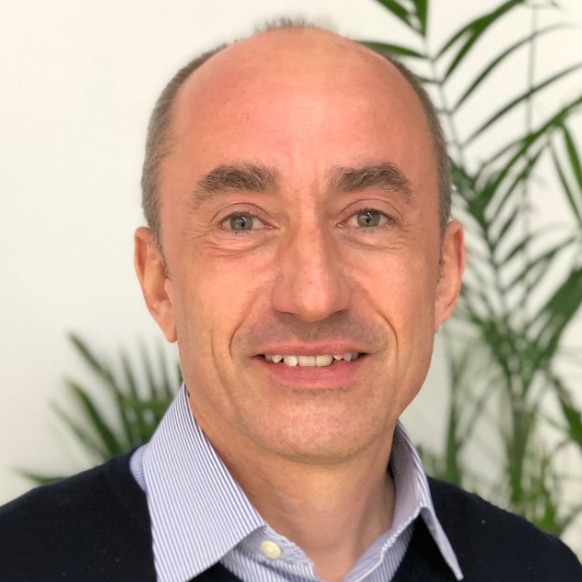
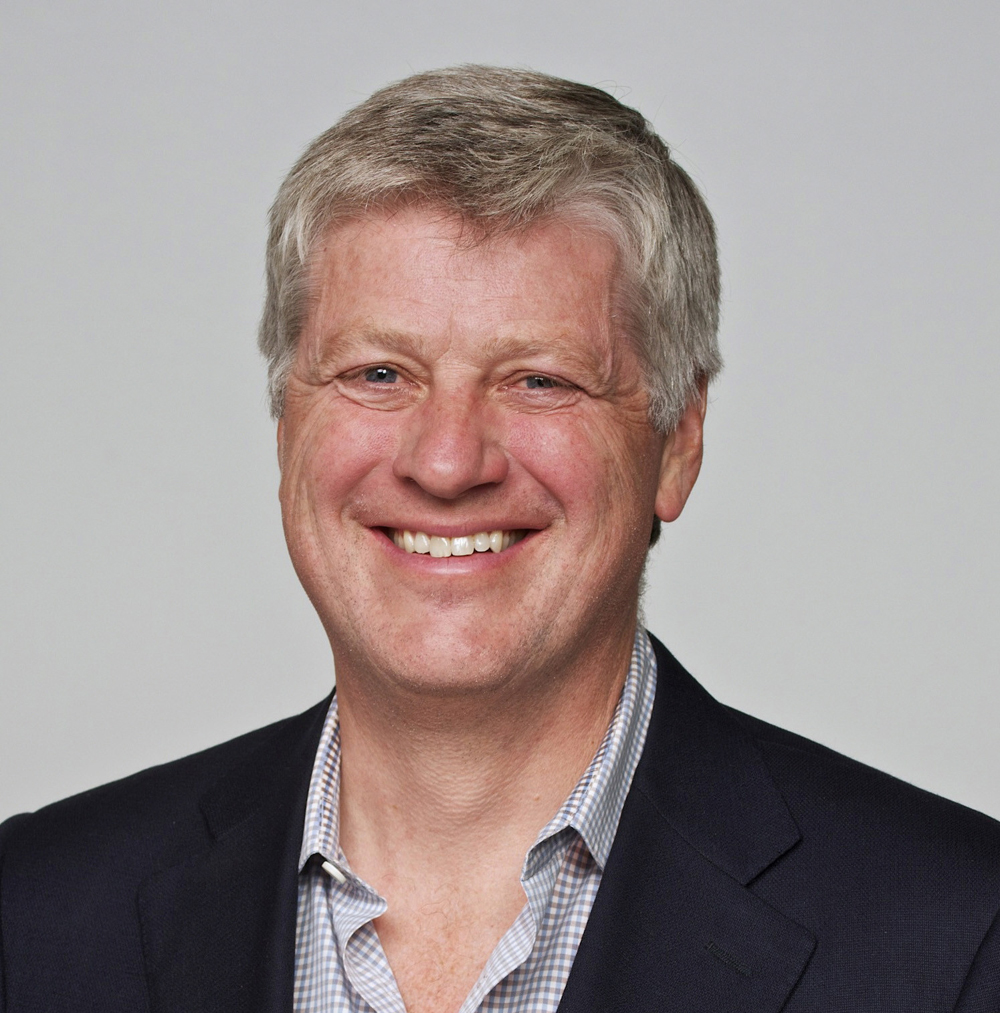
Martin Clough
Martin has led the Digital Transformation of Crop Protection R&D since 2019, and is responsible for R&D...see more
Over 37 years of industry experience with Syngenta, Martin has held senior R&D leadership positions in the UK, USA and Switzerland, including Crop Protection Research, Biotech R&D for Seeds, Project & Portfolio Management for CP and Seeds, and Global Product Biology.
For 13 years, Martin chaired the Plant Sector Advisory Board for Innovate UK Business-Connect, the network partner of the UK government agency - Innovate UK - linking science to industry, retiring from the role in 2025.
He holds a PhD in insect environmental physiology from the University of Leeds and Bachelors degree in Biological Sciences from the University of Birmingham, UK.

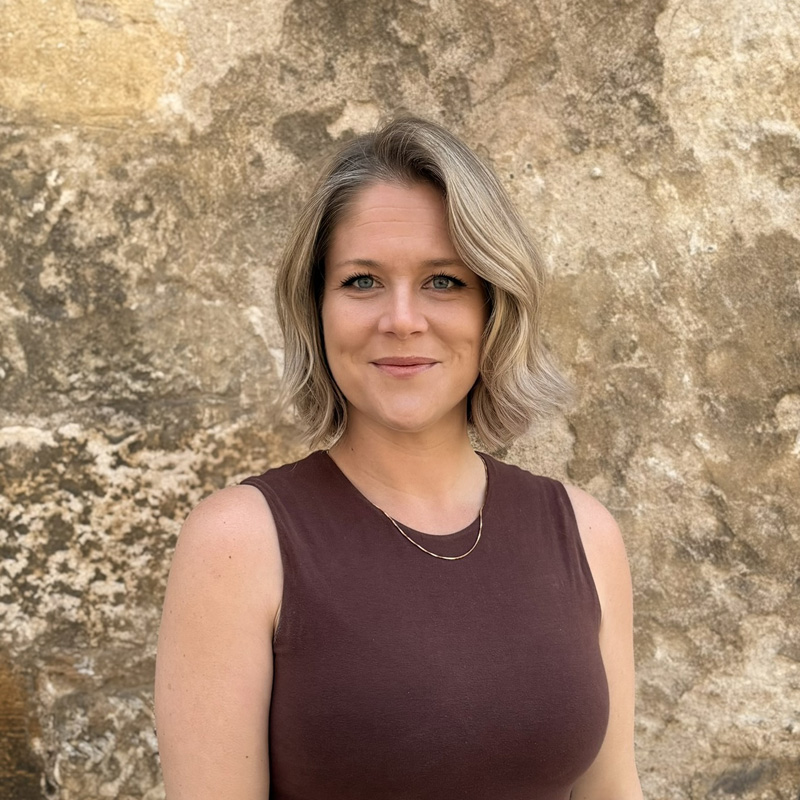
Alex Turk
Alex Turk has worked in television presenting live, recorded and Business TV from ITN, Channel 4 News...see more