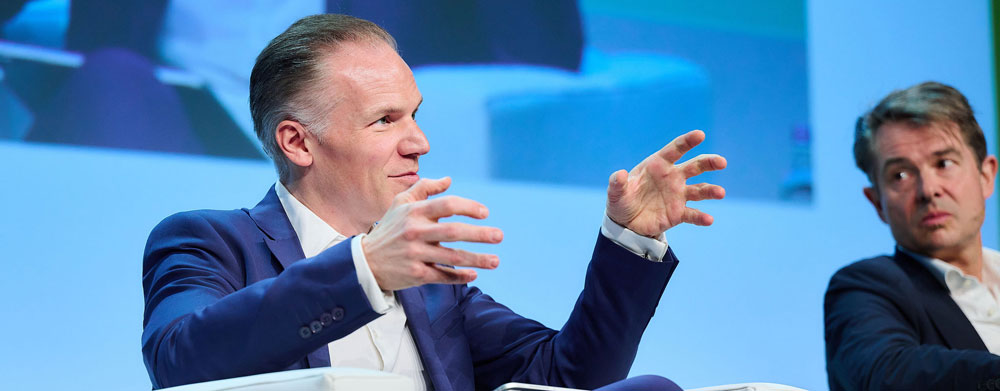

2026 Annual Conference – Session 2: How can we finance and accelerate the transition on the ground?
Tuesday, Apr 14, 2026
The keynote and second panel, moderated by Rose O’Donovan, explored both barriers to financing and potential solutions.
Keynote: carbon farming as a catalyst
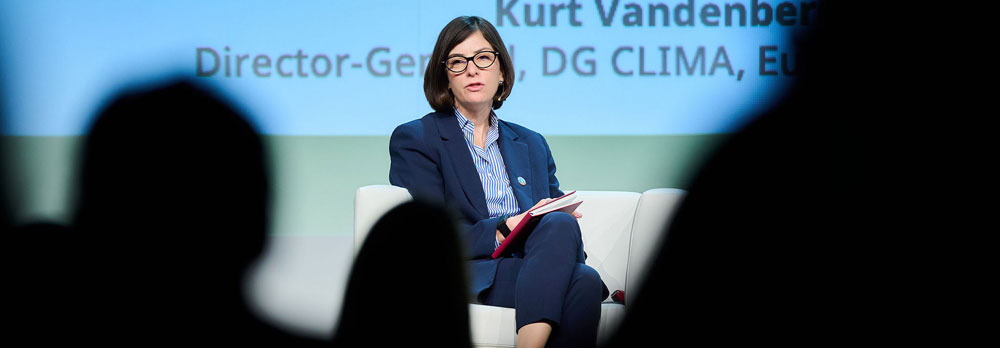
“It looks as though everything is changing. But one thing that is not changing is climate change,” said Kurt Vandenberghe, Director-General, DG CLIMA, delivering the keynote. Agriculture is one of the EU’s most climate-exposed sectors, with rising risks for food production, farmers’ livelihoods, and EU security and stability. Crop losses, soil degradation, loss of carbon sink capacity and geopolitical events all contribute.
This fragility is recognised in new proposals for the next multi-annual budget, which introduce tools for risk and crisis management: an expanded agriculture reserve, a safety net, and mechanisms to support farmers during climate crisis, he said.
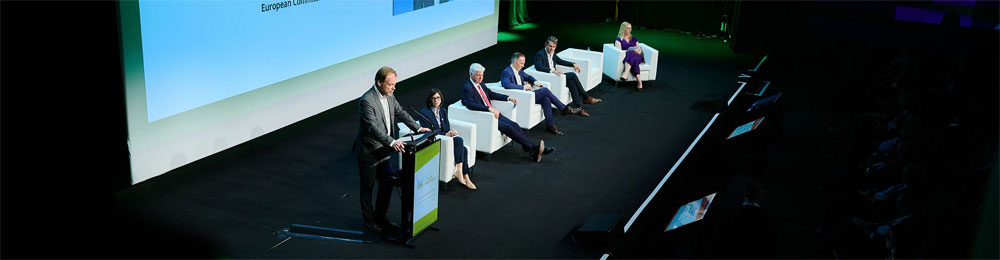
EU policy entrepreneurs – including DG CLIMA – must create enabling conditions for land managers and value chain actors to adapt and transition, with carbon farming as a catalyst. Carbon farming – defined as agriculture and forestry practices that increase carbon storage in soils and biomass and reduce emissions – can support farmers’ resilience and competitiveness through additional income while driving the shift towards regenerative agri-food value chains.
“We are putting in place the main elements for a well-functioning and credible voluntary carbon farming market in Europe,” said Mr Vandenberghe, outlining three pivotal criteria:
- Credible certification: the Carbon Removals and Carbon Farming Regulation (CRCF) covers quantification, additionality, durability and biodiversity benefits
- Accessible monitoring, reporting and verification (MRV): harmonised MRV for land is on the way
- Strong and predictable demand: the Commission is establishing an EU Buyers’ Club.
How do we price the invisible?
Martin Stuchtey, Founder, The Landbanking Group, raised the question of how we value land use. The current approach looks backwards – valuing land on historic agricultural productive capacity – rather than forwards at its total future productive capacity, capturing the ecosystem services on which all economic activity depends. Nature risks are growing: flatlining yields, mounting costs, and the prospect of a market correction repricing nature from invisible asset to visible liability.
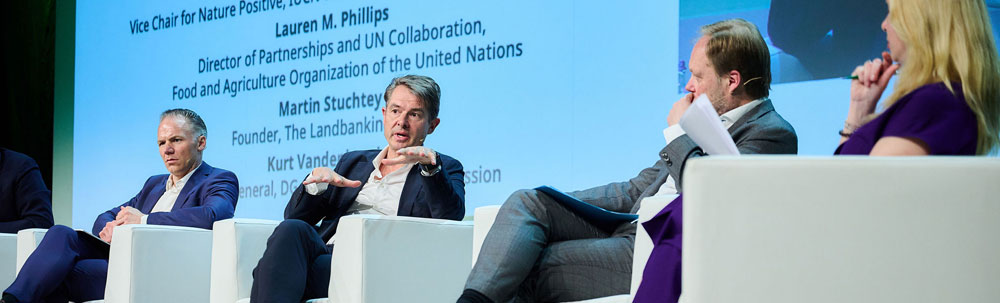
The Landbanking Group’s response is to build digital, financial and legal representations of nature, giving every plot of land an “ecological passport” through which it can be measured, valued, contracted and transferred. A first nature cadastre is coming online this year. “Wouldn’t that make it so much easier… to move towards a world where the next CAP is actually about agri-environmental outcomes, where you can measure them?” he suggested.
The point was reinforced by Michael Brückner, CEO, Munich Re Investment Partners GmbH. Climate and nature risks are already affecting yields, supply chains, insurance costs and asset valuations – yet are still often treated as idiosyncratic rather than systemic. “When climate and nature is priced, addressing those risks stops being a preference and becomes a necessity.” Integrating these risks into mainstream investment decision-making is the most powerful lever available. Better policy support to define who carries climate risk, stronger corporate disclosure standards, and shared modelling approaches would all help create the common baseline needed.
From environmental case to economic case
Harvey Locke, President, Harvey Locke Conservation Inc. and Vice Chair for Nature Positive, IUCN World Commission on Protected Areas, reframed the discussion entirely. The challenge is not the environmental case for protecting nature: it is the economic case, he said. His example was the Amazon and the agricultural heartland of the Río de la Plata basin. The Amazon generates its own rainfall through what is known as the “flying river” – providing 30-40% of the water feeding agriculture in the Río de la Plata. Clearing more than 20% of the forest could cause this mechanism to fail, triggering not a food price shock but a food supply shock of catastrophic proportions. With deforestation already at around 17%, the threshold is close. “We simply cannot afford to lose the Amazon rainforest for good financial and agricultural reasons.”
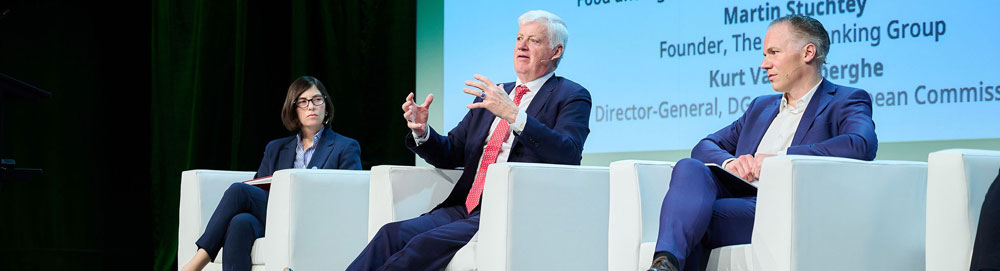
He proposed an insurance product: companies and agricultural producers would buy cover against the collapse of rainfall in the La Plata Basin, with part of the premium invested in forest protection. “You buy true insurance for indemnity, and you also take some of the premium and invest it in saving the forest.” Agricultural producers, water utilities, manufacturers, and large asset owners exposed through their supply chains all have a direct financial stake. “There is a difference between the economics of things and the financialization of things. We have lots of economics that says we cannot afford to lose these things. What we do not have is enough financialization of how to act on that.”
Barriers and opportunities in financing
The barriers to financing were set out by Lauren Phillips, Director of Partnerships and UN Collaboration, FAO, drawing on its paper on financing food for the future. Transforming agri-food systems requires an estimated $680 billion per year, she said, spanning environmental, climate and social challenges: “About half of the world’s population depends on agro food systems for their livelihoods.”
Ms Phillips cited three issues:
- a quantity problem: insufficient overall funding, and the need to reduce the amount that would go to social protection
- a quality problem: existing money not used effectively, with subsidies often misaligned with social and environmental goals
- and a targeting problem: financing heavily skewed towards richer countries and richer people within poorer countries, with less than 1% of climate finance reaching smallholders.
The share of development finance going to climate-related agricultural investment has also fallen from around 50% to 20% and now comes almost entirely from four donors: the EU, Germany, France and Japan.
“We have an opportunity, though, to improve,” she concluded, pointing to debt-for-climate swaps, new bond instruments, and innovative insurance mechanisms of the kind Harvey Locke had described.
Making investments work on the ground
Rose asked Mr Stuchtey and Mr Brückner to give their perspectives “from outside the Brussels bubble” on what is needed for investments to work.
Mr Stuchtey called on the audience: “We have something hot to offer,” he said. “It’s our job as a community to show you that you can build up nature and soils, and measure what that does to the economy. That would give confidence to the rule-makers.”
For Mr Brückner, it was “important that we are starting to create a common baseline – to look at the same thing”: aligning models and developing a shared approach to improve investments and balance sheets.