Food Systems Podcast 96
Interview with Michael Werz
Friday, May 15, 2026
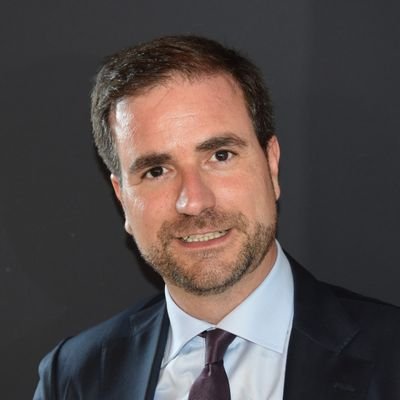
In this edition of the Food Systems Podcast, guest presenter Mark Titterington co-founder of the ForumforAg and Advisory Council member, talks to Michael Werz, Senior Fellow at the Council on Foreign Relations. They discuss how global instability, conflict, and climate change are making resilient food systems central to future geopolitical stability.
Michael warns that food is increasingly being weaponized, and that fragile supply chains, export restrictions, and fertilizer dependencies threaten global security. He calls for stronger multilateral cooperation, greater leadership from Global South nations, and urgent reforms to trade, agricultural policy, and food governance.
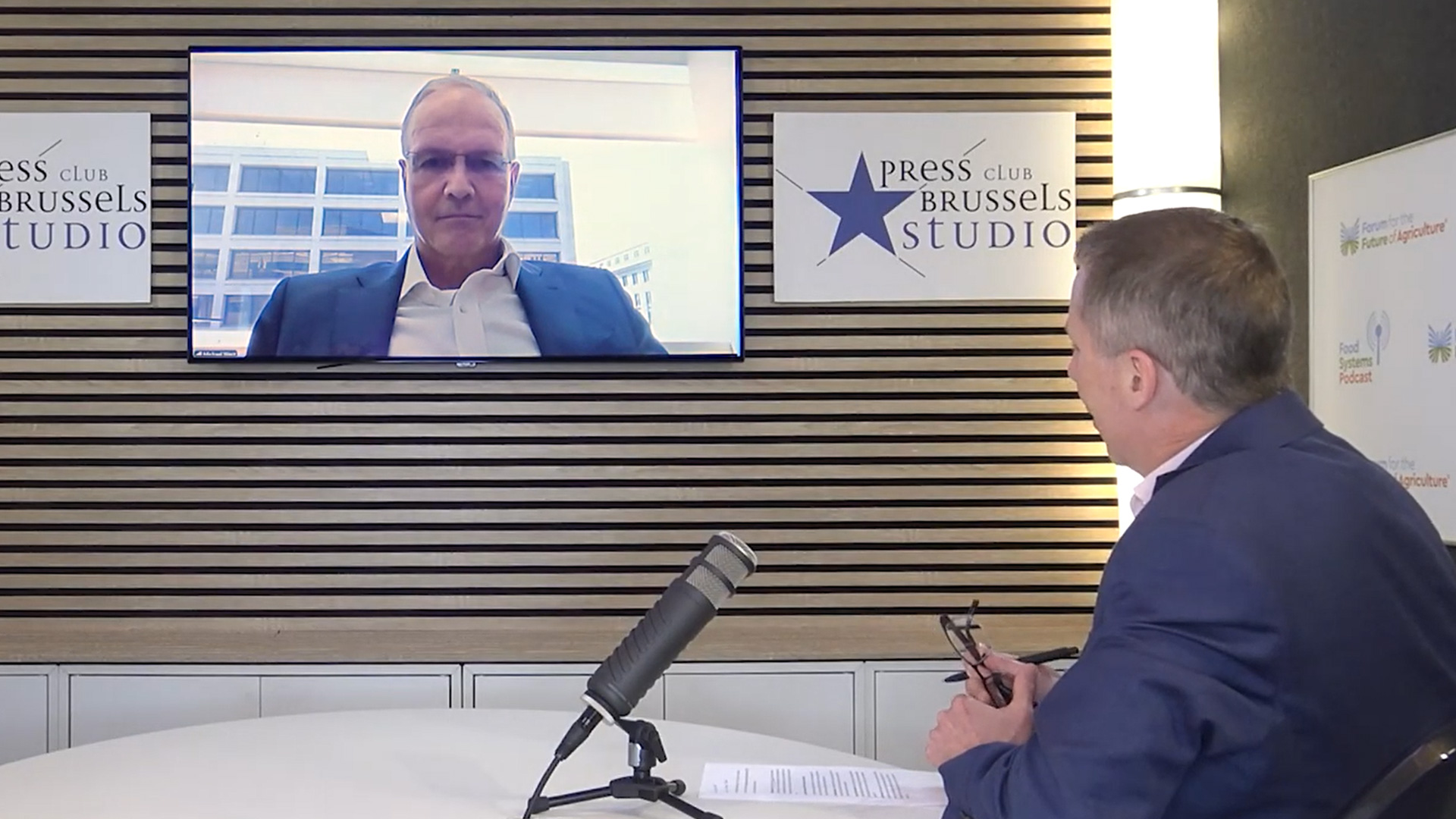
Here is a summary of the conversation.
Michael, you describe the current moment as ‘wrecking ball politics’ with international rules dismantled. In this environment, how can the food system be a stabilizing anchor rather than another casualty of the chaos we see?
It’s an era of tectonic change, with institutions falling apart or being severely damaged. But this makes food systems more, not less, important. This crisis is laying the foundation for a new conversation about how to establish a more stable and equitable global order. Food can’t be decoupled from human needs: people need to eat regardless of who’s in power or what trade wars are under way. Close to 800 million people are suffering hunger right now – and that terrible reality is a source of leverage to drive important conversations. The Iran war and its effects on food and fertilizer systems show the world’s interconnectedness, and that’s an opportunity to make a political point.
How can we form coalitions of the willing to protect the food supply from becoming a geopolitical bargaining chip?
That’s a difficult question. The transatlantic partnership – with the US anchoring the rules-based order – is now a historical artefact. So who can help carry the multilateral system forward as key anchors? Canada, Australia, New Zealand, Japan, South Korea, and important parts of Latin America and Africa.
But we can’t sacrifice the normative, legal and democratic foundations of the global system just because powerful players want to shape the rules. Any coalition of the willing has to look beyond narrow self-interest at the global good.
Where does the energy and drive to build something new have to come from?
Anyone who believes we can have a food system in the Global North that works well and one in the Global South that doesn’t is living in an illusion. In the medium term, that divided world will not be stable or economically productive. The converging pressures – hundreds of millions hungry, food being systematically weaponized, and the ever-increasing pressure from climate change make the urgency of acting now undeniable.
How does the food system get better prepared? What are the early warning indicators that Europe and other global agri-food actors need to monitor to anticipate disruptions before they escalate?
It’s a key question. We’ve seen food weaponized as a long-range weapon in Ukraine, as a recruitment tool for insurgent groups in the Sahel, and as a tool to starve populations in Gaza.
But early warning indicators need to be structural, not just reactive. That means much more systematic engagement in foresight exercises, war games, and better policy planning. On the practical side, we need to watch export restriction announcements, often a leading indicator of broader system stress. Fertilizer concentration is a huge issue: we are often only one political decision away from a crisis. We need to monitor port and logistics choke points, shipping routes, stress on insurance markets, and currency volatility in food-importing nations.
And we should pay close attention to political rhetoric: when governments describe food as a matter of national sovereignty and security, they are laying the groundwork for restrictions. We need clearing houses and much more engagement in these areas.
These indicators have been with us since the beginning of the century and we haven’t reacted. Why do you think we might act now?
Because the Iran war – the first real war of the 21st century in a modern sense – shows us the cascading effects producing harm and victims in regions thousands of kilometres from the battlefield. Our supply chains and trade routes are highly integrated, and many are razor thin because of the drive to be economically efficient.
We need to see global trade, geo-economic dependencies, and deterrence against the weaponization of food as a core question of resilience. If you play out current developments another 20 to 30 years, the future is not going to be feasible, manageable, or sustainable.
The transition we need can’t succeed without meaningful leadership from the Global South. But what does constructive leadership from emerging producer and consumer nations look like?
We need to stop framing food security issues and Global South engagement in terms of development and humanitarian aid. Countries like Brazil, India, Indonesia, Nigeria, and Ethiopia are central players in food security and their political decisions will determine whether we transition in the right direction.
African nations in particular need to drive the agenda on soil health, smallholder productivity, and how to structure technology transfers from more developed countries. It’s encouraging to see Brazil using its extraordinary agricultural productivity as diplomatic capital to shape trade rules, and India pushing for a seat at the table on global reserve architecture for commodities. This should be incentivized and supported because, if they happen under the guiding principles of transparency and accountability, it’s a win-win situation for everybody.
You spoke at the Forum for the Future of Agriculture Annual Conference about not being bystanders to bulldozer politics. What could a farmer, a food business leader, or a citizen do today to help reboot the system from the bottom up?
The private sector in particular shouldn’t shy away from engaging in policy processes and multilateral reform. There are concrete areas that need to be on the political and business agenda: agricultural subsidies artificially depressing commodity costs and dumping surplus production into Africa and Latin America; land purchases and leases by foreign countries in Africa; market concentration with a handful of trading companies controlling global commodity trade.
The multilateral system is imperfect – but it’s all we have. Everyone needs to engage in redefining and broadening what the multilateral system needs to be, and having a thoughtful conversation about how national interests need to be adapted.
Join us at our Regional Event Ireland in Dublin on Tuesday, June 2, 2026 to continue this and other conversations
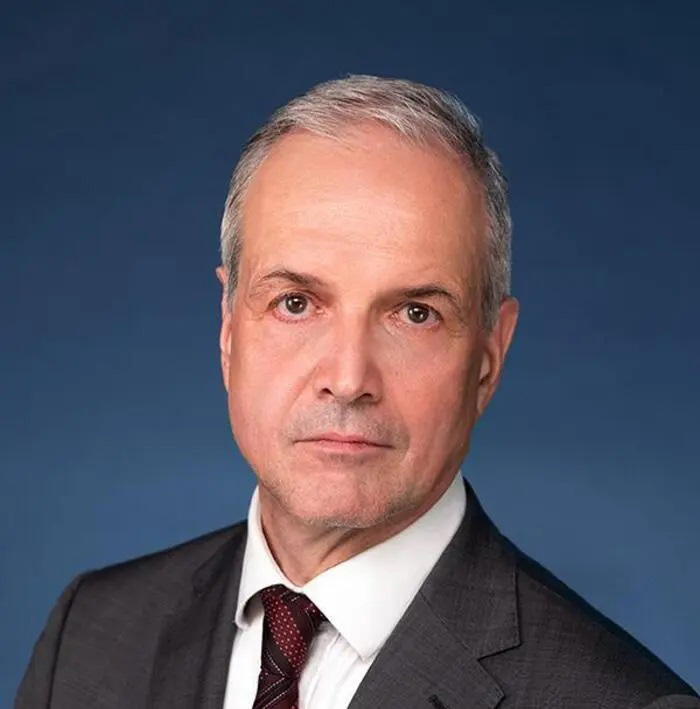
Michael Werz
Michael Werz is a senior fellow at the Council on Foreign Relations (CFR). His work focuses on...see more
Founded in 1921, CFR is a nonpartisan, independent national membership organization, think tank, educator, and publisher, including of Foreign Affairs. It generates policy-relevant ideas and analysis, convenes experts and policymakers, and promotes informed public discussion—all to have impact on the most consequential issues facing the United States and the world.
Previously, Michael was a senior fellow at the Center for American Progress and a senior transatlantic fellow at the German Marshall Fund working on transatlantic foreign policy and the European Union. He has held appointments as a public policy scholar at the Woodrow Wilson Center in Washington, DC, and as a John F. Kennedy memorial fellow at Harvard University’s Minda de Gunzburg Center for European Studies.
Werz has published numerous articles and several books dealing with a wide range of scholarly and political topics, including race and ethnicity in the twentieth century, Western social and intellectual history, minorities in Europe and the United States, and ethnic conflict, European politics, and anti-Americanism. He is a graduate of the Institute of Philosophy at Goethe University in Frankfurt, a former professor at Hannover University in Germany, and a former and adjunct professor at Georgetown University’s Center for German and European Studies.
Mark Titterington
Mark is a Co-founder and a former Director of the Forum for the Future of Agriculture. He is now...see more