Food Systems Podcast 95
Interview with Barry Cowen MEP
Thursday, May 07, 2026
In this edition of the Food Systems Podcast, Rose O’Donovan talks to Barry Cowen MEP ahead of the ForumforAg Regional Event Ireland on June 2 and Ireland taking over the Presidency of the EU on July 1.
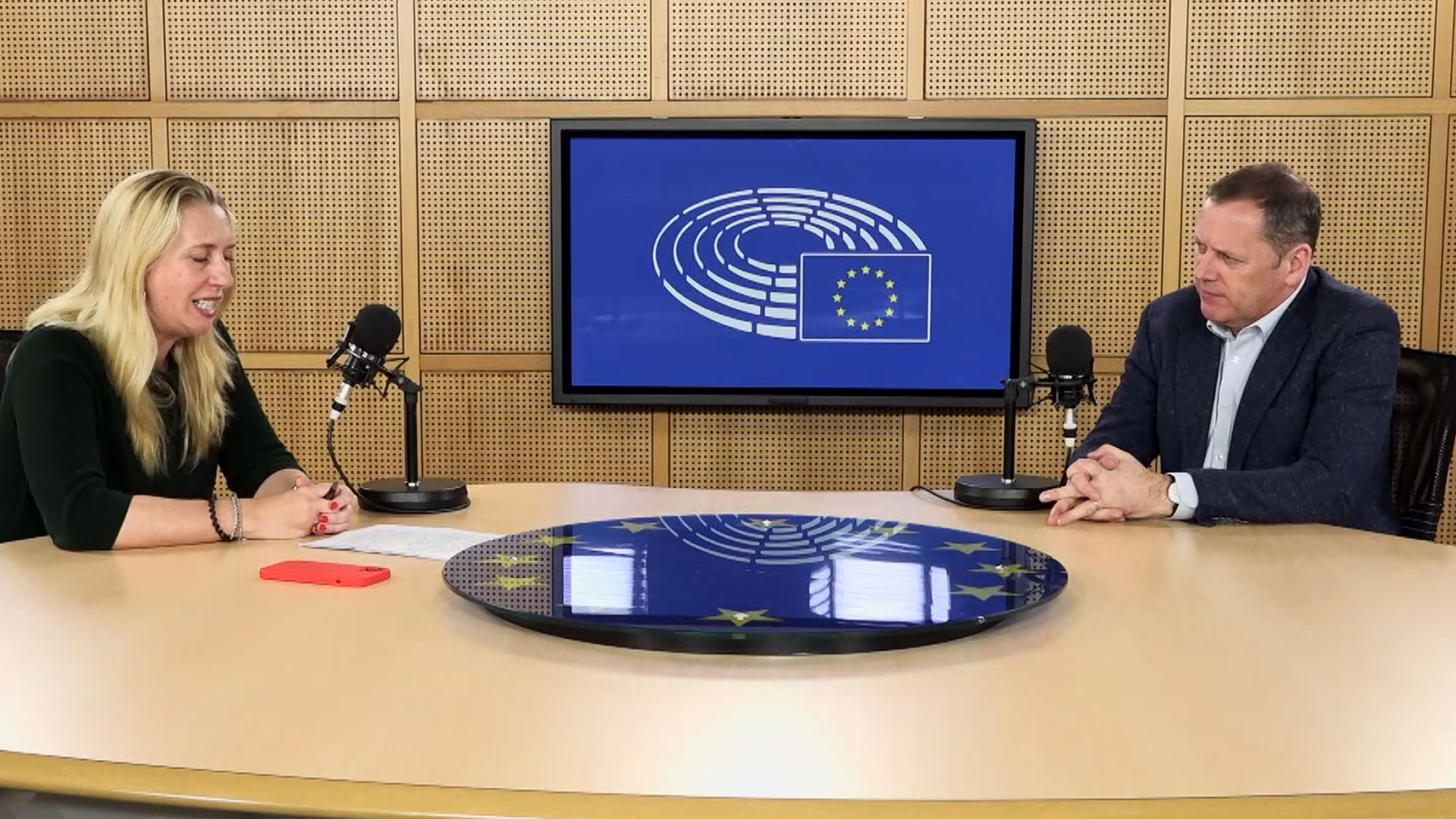
Mr Cowen represents Ireland’s Midlands North West sits with the Renew Europe group in the European Parliament. He is a full member of the Committee on Agriculture and Rural Development and Renew Europe’s shadow rapporteur for the Parliament’s report on the future of agriculture and the post-2027 CAP.
They discuss the Commission’s proposals for the future CAP, the gap between ambition and budget, concrete ideas to bridge the gap, and the pressing issues of generational renewal, farm payment reform, sustainable livestock and genomics.
Here is a summary of the conversation.
Barry, you’ve said bluntly the future CAP proposal has real ambition but not the budget to match. What are MEPs’ key asks?
The Commission is proposing €293 billion for the next programming period, compared to €386 billion in the outgoing CAP. The European Parliament’s position calls for €433 billion – reflecting inflationary pressures and the scale of what we’re actually being asked to deliver. Farmers will judge any new CAP on the basis of what is available to help them build production systems that meet both environmental ambition and consumer expectations. Without adequate funding, much of what is proposed amounts to aspiration rather than policy.
I recognise and accept the need for increased spending on defence and security – but that can’t be complete without food security. We need credible ways to close the funding gap, seek an increase however big or small, and find savings that could be redistributed towards generational renewal and avoiding further conditionality to food production.
So how do we actually close the funding gap of 20% or so? Should national capitals come up with the money?
No two Member States have the same view on agriculture, and the funding just isn’t there. We have two concrete proposals. First, the €48 billion that President von der Leyen made available mid-term in response to the Mercosur agreement could be front-loaded into the new CAP envelope. There is already provision for emergency funding should the concerns around Mercosur materialise – this would simply make those resources available from the outset.
Second, there is a €45 billion envelope currently designated for rural development that should also go back in the CAP envelope, except for some specific programmes. There is growing support for these measures among MEPs and, I believe, in the Council too.
Many would say the current proposals are like renationalising the CAP – so it’s no longer a “common” policy. What’s your take on that?
I do think there’s an element of political realism here – those in Brussels would rather the protests taking place outside the Parliament took place instead within member states. The proposals have guiding principles – dominant rules, mandatory rules, with some voluntary rules – and that brings real opportunities for Member States to get it right in terms of the pace of the transition. We saw issues arise in the last mandate around GAEC and its interpretation, despite the fact that soil types vary by region, let alone by country or member state. That couldn’t be squared centrally. This approach gives Member States more flexibility to navigate that – and that could be a recipe for a transition that actually happens.
What about degressivity and the proposal to cap farm payments at €100,000 per farm per year: what is the thinking on that?
The principle is fair: concentrating payments on those who need them most, and redirecting savings toward transition, young farmers, and new entrants. In Ireland, 55% of farms share 45% of funding, so capping and degressivity already operates effectively on a voluntary basis and doesn’t pose the same challenge it does elsewhere.
The difficulty arises in countries like Czechia, Germany, and Poland, where farm structures are entirely different. So while I support the intent behind capping, we need serious legal analysis and carefully crafted recommendations to ensure the mechanism doesn’t simply create loopholes or penalise legitimate farm structures. The goal – finding savings and redirecting them to more meaningful initiatives – is the right one.
You’ve called generational renewal “an existential threat”. We now have a generational renewal strategy – but what can make the farming sector attractive?
The core issues are access to land and viable income. Double payments and starter packs for young farmers can begin the process, but they have to be accompanied by a credible exit strategy for older farmers. Simply cliff-edging payments for those of pension age is not a workable political solution. Member States need to put complementary exit packages in place – and access to generational renewal funding should be conditional on having those measures in place.
There are other means: we need to confront the situation of the 66% of European farms that are under 10 hectares. Many are not commercially profitable on their own terms, and they depend on off-farm income. But they have enormous value: to their communities, to nature, to preventing depopulation of rural areas. Until we find a credible way to monetise that value, through carbon credits, nature restoration payments, rewetting schemes, we are failing those farmers and the regions they sustain.
The Irish Presidency is coming up and will be leading discussions on the MFF (the multi-annual financial framework) and the CAP: what’s the timeline – is the end of the year feasible?
It has to be seen as feasible – this is a main responsibility; even if there’s conditionality associated with an agreed CAP budget, it will have played a vital role.
Another priority for the next semester will be sustainable livestock, with a strategy due out early in the Irish Presidency. What does the strategy need to contain?
A livestock strategy has to sit alongside a protein strategy and a fertiliser strategy. Livestock production is severely impacted by input costs, and we’ve seen livestock numbers declining across Europe when world population is growing and global food security demands are increasing.
On protein specifically, I want to see serious incentives for the tillage sector to grow plant protein crops in Europe. We need to address the imbalances stemming from Europe’s dependency on South American states for soy. And on meat protein, we need models like a dairy-beef scheme to bring the dairy and beef sectors closer together and address emissions concerns without resorting to culling.
Finally: new genomic techniques. Where do you stand?
I would never say no to advances in genomics. Going back to dairy-beef, advancements in genomics have brought a product that can satisfy the needs of both dairy and beef sectors and address the issues associated with emissions.
The Regional Event Ireland will discuss agri-food system transformation, financing the transition and the CAP, and take a deep dive into sustainable livestock production.
More information and register here.

Barry Cowen
Barry Cowen was elected in June 2024 to the European Parliament as an MEP for the Midlands...see more
A native of county Offaly, Barry has over three decades of experience in public office, beginning as a local councillor and later serving as a member of Dáil Éireann from 2011 to 2024 where he represented the Laois-Offaly constituency.
During his time in national politics, Barry held several prominent roles within Fianna Fáil, including key spokesperson and Programme for Government negotiating team positions, as well as serving as Minister for Agriculture, Food and the Marine in 2020.

Rose O’Donovan
Rose O’Donovan has been Editor of AGRA FACTS since March 2010, having previously served as Deputy Editor on the...see more