
2026 Regional Conference – Ireland
Event summary
Monday, Jun 08, 2026
Forum Regional Conference visits Ireland prior to Irish Presidency of the EU Council
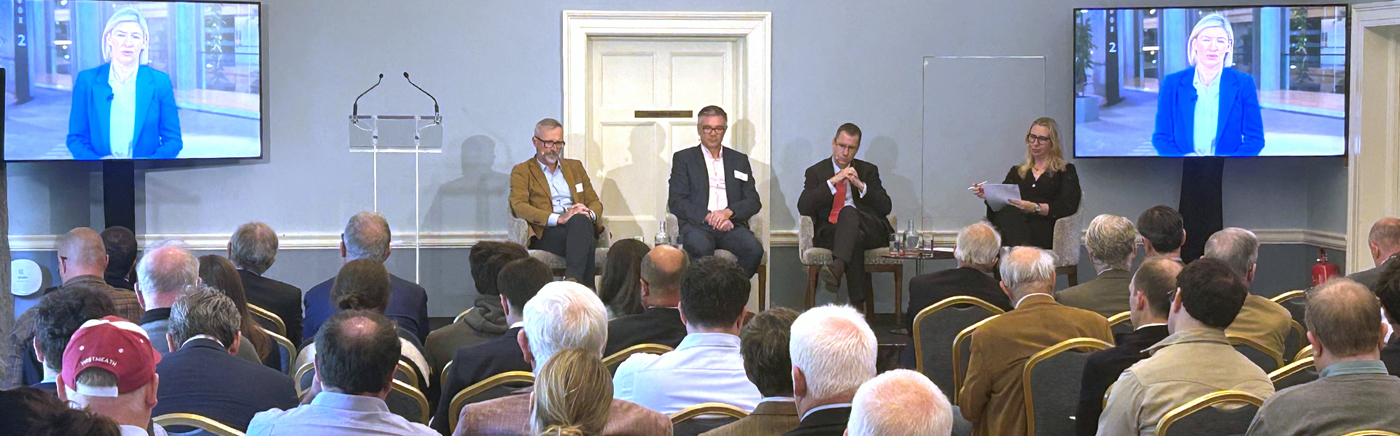
The Regional Event Ireland was particularly timely, said Moderator Rose O’Donovan. This sense of a significant moment set the context for debates on pressing topics – agri-food systems transformation, financing the transition, sustainable livestock production, and the future of the Common Agricultural Policy – with a vivid flavour of how events are unfolding in Ireland. On July 1, Ireland assumes the Presidency of the EU Council; on July 7, the European Commission’s highly anticipated EU livestock strategy and updated protein plan are due; and the event would build on the recent ForumforAg annual conference, said Rose.
Panel 1: Driving agri-food system transformation in the EU
The first panel focused on what needs to be done to drive the transition, with a heavy focus on funding but also highlighting the need for faster change and a fundamental topic for farmers – soil health.
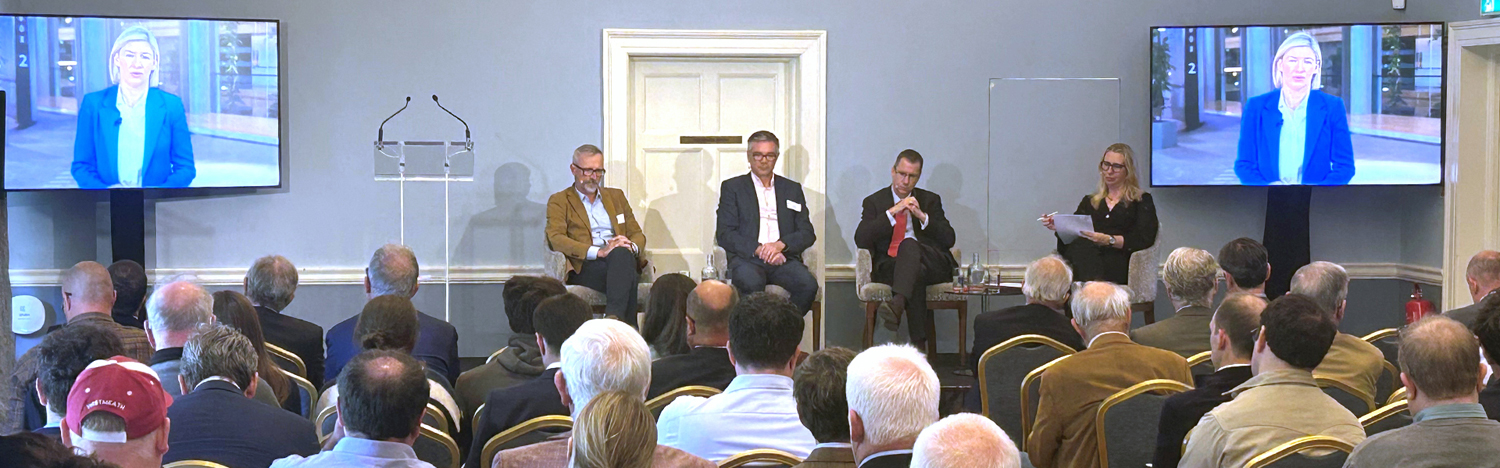
On stage were Mark Titterington, Co-founder of the Forum for the Future of Agriculture and member of the Advisory Council; Stewart Gee, Orchestrator of the Ireland Land Agri-Food Deep Demonstration at Climate KIC; and Martin Voss, Chief Innovation Officer at the Oath Group. Nina Carberry, Fine Gael MEP for Ireland’s Midlands Northwest and member of the European People’s Party, joined online with a video recording from Brussels, where she was taking part in budget negotiations.
A pivotal moment for the CAP
The budget negotiations gathering pace, said Nina Carberry , who went on to call for a stronger financial commitment to agriculture, a standalone CAP, and a flexible policy to reflect realities in each member state’s farming systems. The European Parliament is pushing for €433 billion, to reverse proposed cuts and restore rural development funding that has been left out of the Commission’s proposal. “We need the Council and the Commission to listen,” she emphasised.
Properly ring-fenced funding for eco-schemes and environmental measures is vital to support farmers who are already making significant efforts to farm more sustainably. A strong common framework must be flexible enough to enhance different farming systems.
Beyond the CAP, Ms Carberry highlighted the European Competitiveness Fund and Horizon Europe as additional funding streams that must be accessible to SMEs, agri-tech innovators and farmers. Funding must not exclude smaller but highly impactful projects, she warned.
As to the upcoming EU livestock strategy, it needs to be economically viable, environmentally responsible and grounded in a fair and functioning value chain, she said.
“If recent global events have taught us anything… it is that Europe has at times become complacent about food security. We can’t afford to make the same mistake again,” Ms Carberry concluded.
Optimism, pessimism and the key to unlocking finance
Mark Titterington was “unbelievably optimistic and unbelievably pessimistic”. Optimistic about the unprecedented amounts of public and private money now circling agriculture, from carbon sequestration to biodiversity enhancements to supply chain resilience. “We have it almost in the cusp of our hands for farmers and land managers to be paid for the public goods they provide beyond the crop,” he said.
The pessimism comes from failure to unlock that potential. He highlighted the risk of over-regulating carbon farming and crowding out private sector actors, as well as barriers to adoption of cover crops – which, if overcome, could lead to “a fantastic opportunity” of a new revenue stream for aviation fuel. More broadly, he pointed to the continuing barriers to entry for biological and other farm tools.
On the CAP, “we have to work out what is the core objective”, said Mark. How best to spend the billions to send market signals not just to farms but to private co-investors. “It wasn’t built to do that, but in my view it needs to transition into that.”
Frustration with the slow pace of change
Stewart Gee, leading Climate KIC’s work in Ireland in partnership with the Department of Agriculture, was frustrated rather than pessimistic. Change was happening but “infuriatingly slowly”, largely due to an unaligned regulatory and bureaucratic landscape.
He described Climate KIC’s work as part of Food Vision, Ireland’s 10-year agri-food strategy. The goal was to close the gap between reality and ambition – first climate ambition and now sustainability ambition. Working with 25 organizations, Climate KIC has created seven large-scale interventions covering different aspects of the agri-food sector.
One specific challenge is identifying and rolling out “ready now” technologies, of which there are only a few. He gave the example of manure additives to reduce methane from slurry. The technology is particularly important because 38% of Ireland’s national emissions come from agriculture – nearly four times the European average. The challenge is not a shortage of solutions or money, but the complexity of aligning all parts of the system – getting products reflected in the national inventory, included in the Origin Green sustainability programme, and integrated into Teagasc’s AgNav advisory tool.
“It’s not as simple as saying here’s a product, it works, go use it. There’s a whole plethora of parts of the system that need to be lined up.”
“Don’t neglect the soil microbiome”
Martin Voss, of the Oath Group, a recent addition to the Forum’s partners, gave a vivid example of how technology can advance the transformation. While regenerative agriculture practices are widely known, attention to the soil microbiome is “the only way that we’re going to step change soil health, water retention, nutrient availability in soils over time.”
Oath Group, a public benefit company, has developed microbial consortia – products containing bacteria and fungi critical to soil functions that have been degraded or eradicated over time – and has been trialling them in field conditions. In Rwanda, in partnership with the Rwandan government, unfertilised treatments have more than doubled yields, while also transforming the livelihoods of subsistence farmers. In the EU, trials have been running for two years in the Mediterranean region, where drought stress is the primary challenge: reducing water supply by 30%, Mr Voss said, can be compensated for, with the additional benefit of improving the synchronicity of harvests for vegetable growers. The Oath Group was also beginning trials in the Cork region. The bigger point, he emphasised, was that soil health is the foundation for everything: “If we can’t improve soil health, I don’t know how we’re going to solve the problem.”
Discussion: Key ingredient for transformation
Asked by Rose to nail down a key requirement for transformation, Mark said: “We’ve got to get more money in farmers’ pockets. We’ve got to join all these little dots in the system up in order to make it easier for farmers to do what they do and to get paid for doing it.”
For Stewart Gee, it was “putting the culture back in agriculture”. “We’re talking about the science, we’re talking about the technology, but where’s the culture? You’ve got all these brilliant things that can reduce emissions and improve profitability, most farmers don’t do them. So why?”
And for Mr Voss, it came down to the administrative burden that growers and companies like Oath face in the EU. “This part of the world has turned into the most difficult and most expensive place to get anything registered… it’s putting Europe on the back foot.”
Panel 2: Financing the transition – deep dive
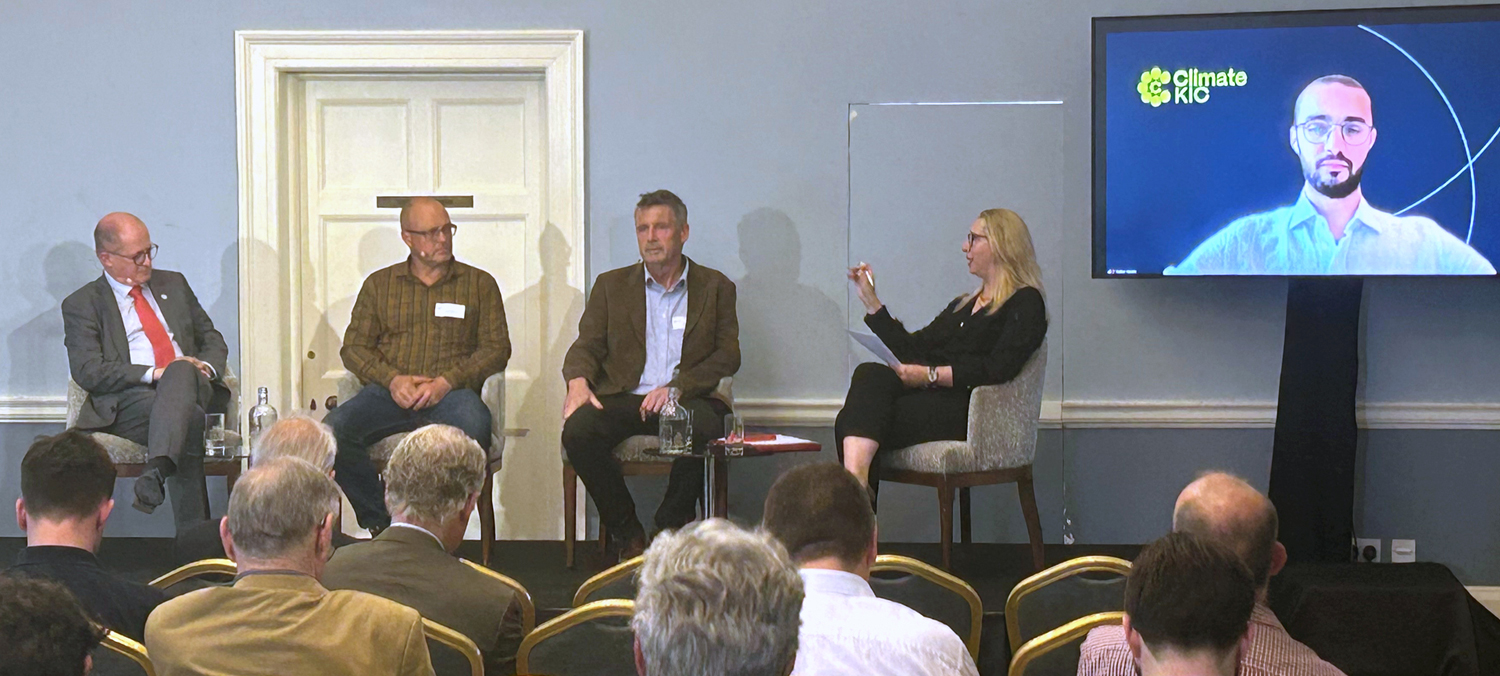
Where does the money come from? Simply put, that was the focus for the second panel, which brought together practitioners working on the ground to explore successful financing. In the room were Brendan Dunford, Founder of the Burrenbeo Trust in Ireland, Douglas McMillan, Founder of the Green Restoration Ireland Cooperative (GRI) and Jurgen Tack, Secretary General of the European Landowners’ Organization (ELO) , with Matteo Vanzini, Co-founder of the Place Finance Lab at Climate KIC, online.
The pocket, the head and the heart
Brendan Dunford shared his experience working with farmers in the Burren, County Clare, and completing his PhD which validated that the Burren’s celebrated biodiversity is entirely dependent on traditional farming practices. He echoed a major theme from the first panel – the need to pay farmers not just for food but also for ecosystem services.
The Burrenbeo Trust designed a results-based payment scheme, rewarding farmers in proportion to what they deliver for biodiversity. “The better the condition, the more money you got,” he said. He framed his approach around “pocket, head and heart”. On the pocket, results-based payments work for nature, for the taxpayer, and for the environment. On the head, farmers need local, accessible advisory support. On the heart, “We should give farmers ownership of the narrative.” Nature conservation has for too long been led by experts and policymakers, leaving farmers feeling sidelined.
Mr Dunford now works with ReFarm, a project bringing together corporate, philanthropic and public funding to pay farmers directly for nature actions – immediate payment, minimal paperwork and significant impact.
Peatlands: A major opportunity for Ireland
Douglas McMillan focused on peatlands – Ireland’s third largest source of agricultural emissions after manure and methane – and the work of the Green Restoration Ireland Cooperative (GRI) to find viable solutions for farmers. GRI’s Farm Carbon EIP discovered that every ten centimetres of water table change equates to five tonnes of CO2 per hectare per year, which opened the door to a graduated approach: farmers could raise water levels incrementally, receiving graduated payments for each step, with significant climate, water quality and biodiversity benefits achievable well before full rewetting.
Mr McMillan also described the concept of paludiculture, or productive wet agriculture, as a way of giving farmers a viable income from rewetted land. Farmers should be offered the widest possible range of options, he said. GRI’s approach proposed a three-zone mosaic: restored raised bog at the centre, cut-over peatland in the middle zone (currently degraded, emitting heavily and generating no income, and so ripe for testing a broad range of paludiculture options), and the working farm on the periphery. “What we want to do is give the farmers the choice of what they want to grow, at their own pace, and let them do it.”
ELO certificate to speed up private investment
Jurgen Tack spoke for the ELO’s 2.8 million private landowners across Europe. The ELO believes CAP should go not to those who need it most – the EU position – but to those who deserve it most for delivering measurable environmental outcomes.
He highlighted slow policy development as an impediment to progress: on carbon and nature markets, there were 550 organisations active in carbon farming in Europe five years ago, but today only 37. The cause? The length of time taken to develop a final framework, and layer upon layer of legislation driven largely by pressure to prevent greenwashing – to the point where farmers lose interest.
The Commission was repeating the same mistakes with nature credits, he said. The ELO has responded by developing its own investment certificate, allowing companies to invest directly in private landowners delivering biodiversity improvements now, and potentially repay the investor from carbon credits once the regulatory framework catches up. “We do not have to wait another three or four years to see what the Commission is finally going to do.”
Place-based finance and resilience dividends
Finance approaches need to be innovative and holistic – that was the message from Matteo Vanzini, talking about the work of the Place Finance Lab . The Lab designs financial structures that allow capital to flow towards regional, resilient food systems, and is currently working both in Ireland through the Climate KIC Deep Demonstration and in Cornwall and Devon through the Peninsula Food Plan.
The initiative grew out of asking why projects were not being funded – sometimes because they are too small but also because often financial instruments were poorly designed for the task.
He introduced a key concept – resilience dividends, which go beyond environmental outcomes and into soil health, water supply and quality or local supply chains. The goal is to bring many aspects together through taking a place-based approach at the landscape level, pulling together multiple outcome payers – public, private, philanthropic – into a single payment structure for farmers, drawing on lessons from social and development impact bonds.
Discussion: Tackling the disconnects and gaps
Rose O’Donovan pushed the discussion further into some of the mismatches, gaps and hurdles involved in financing. Looking at the reform of the CAP, Brendan Dunford highlighted the lack of alignment between the policymaking process and farmers on the ground: “Good policy, good strategy, good science are important. But what about good practice? I think we’ve lost sight of that.”
How to incorporate science in policymaking? Douglas McMillan said policy needs to “start with the farmers and work backwards”. “Let’s empower farmers, and – insofar as they want to focus on science, let’s enable them to do it and work with them and listen to their observations.”
Looking at investment, Jurgen Tack highlighted a fundamental mismatch of time horizons: environmental organisations demand immediate action, politicians think in five-year cycles, and the CAP operates over seven years – yet farmers make investment decisions over thirty. The ELO’s long-term investment instrument is designed to help bridge this gap.
Matteo Vanzini expanded on the Place Finance Lab’s role matching innovation on the ground and the capital needed to fund it – “acting as a bridge between the innovation on the ground and the people who have identified what needs to happen… and connecting them to the capital.”
Panel 3: Sustainable livestock production
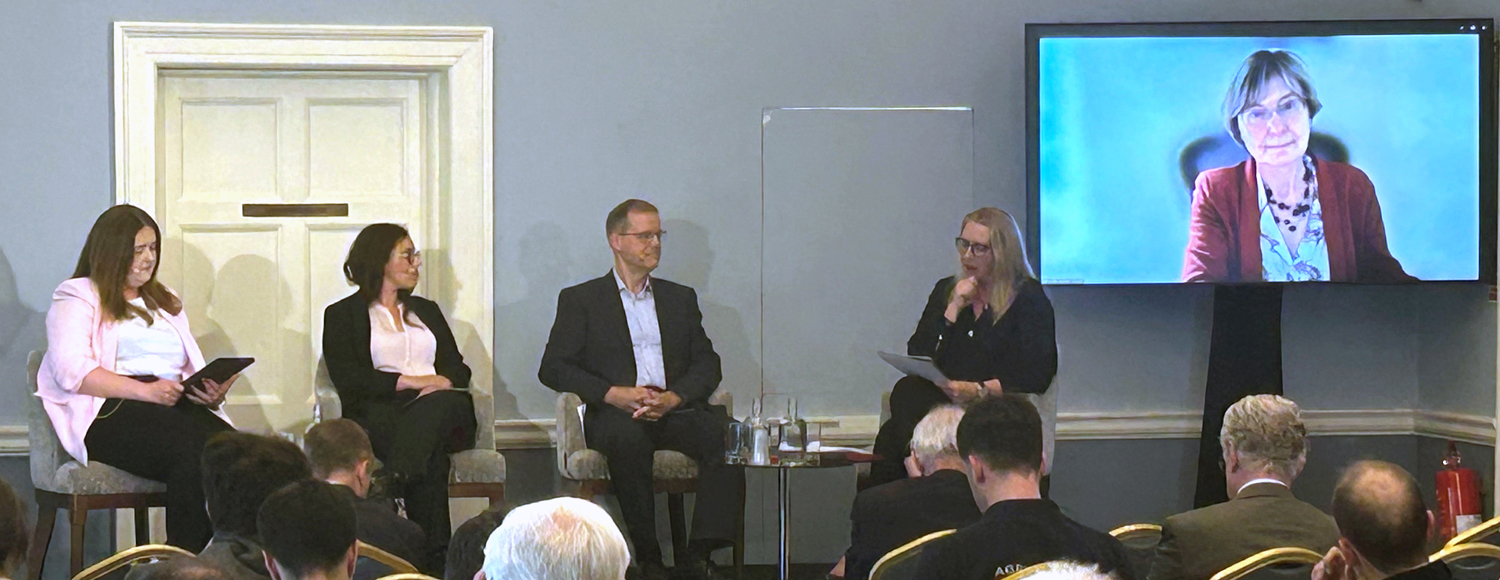
The third panel addressed one of the most contested and consequential questions facing European agriculture – and highly relevant to Irish farming – the future of livestock production. Brigitte Missone, Acting Director for Markets and Head of Unit for Animal Products at DG AGRI, joined online as the penholder behind the forthcoming EU livestock strategy. On stage were Jan-Erik Petersen, Expert on Ecosystems and Accounting at the European Environment Agency (EEA); Blandine Camus, Food Systems Officer at IUCN; and Elaine Houlihan, former President of Macra.
A long-term vision for the livestock sector
Brigitte Missone opened by setting out the five pillars underpinning the livestock strategy currently due for adoption by the European Commission on July 7.
- Crisis resilience – addressing vulnerability to market shocks, animal diseases and climate change through better risk management, stronger disease prevention and investment in adaptation through innovation.
- Competitiveness: not so much on price, but on quality, traceability and reliability, through circular economy approaches, feed autonomy, high-value chains and championing reciprocity for EU standards on the global stage.
- Sustainability – finding the right balance between areas of high livestock concentration and those threatened by land abandonment, through on-farm renewable energy, precision feeding, herd management and extensification to support biodiversity and carbon sinks.
- Territoriality: recognising that livestock farming sustains rural communities, shapes landscapes and provides social fabric, as well as attracting a new generation of farmers.
- Excellence – supporting every system to perform at its best, from high-value artisan chains in mountain areas to state-of-the-art indoor farms reducing emissions and pollution.
The strategy’s ambition, she concluded, is to translate this wide vision into actionable points across the regulatory framework and the various levels of plans, be they strategic, national or regional.
The biodiversity case for livestock
Jan-Erik Petersen came with “a pastoral view of livestock rather than mainstream livestock production”. He highlighted the contribution of livestock to the European landscape and to biological diversity. Far from the “ideal” landscape for biodiversity being large forests, it more diverse with, for example, “herbivores uprooting trees, grazing vegetation and grass, and creating open spaces… creating many different niches for many different species.”
Large herbivores have traditionally played a vital role in European landscapes, he emphasized. Today, around one third of all habitats listed for special protection under the Habitats Directive depend on traditional grazing or mowing practices. A recent EEA study estimated these habitats extend across roughly 35 million hectares, equivalent to around 22% of official EU farmland. Managing them appropriately would require livestock numbers corresponding to 10 to 15% of the total EU ruminant population. “We feel that agriculture policy and society needs to recognise the value we have from these extensive systems.”
Livestock and nature: two sides of the same coin
Blandine Camus was clear that livestock systems and nature should not be seen as opposing forces. IUCN’s position was not as an opponent to livestock farming but as a provider of evidence, science and solutions. She called for more sustainable livestock farming, with “a range of practices, of approaches that can support the transition of the sector more globally”.
Like other panellists, she also wanted to see greater policy coherence – agriculture, diets, biodiversity and climate were still being approached as separate topics – and for the next EU budget and CAP to build a genuine bridge between CAP strategic plans and nature restoration plans.
“Livestock production models touch on our diet, our biodiversity, our rural livelihoods, cultural identities and traditions. So this is a challenging area, and because it’s challenging we need to continue the dialogue after the publication of the livestock strategy.”
“Do I see a future for myself? No”
Elaine Houlihan, from a farming background in County Limerick, brought the most personal and direct testimony of the panel. Sustainability, she argued, has three pillars – environmental, economic and social – and the debate focuses too often on only one of them. Irish farmers had already demonstrated their commitment: improving breeding efficiency, reducing emissions, investing in animal welfare, adopting new technologies. “The challenges ahead are significant. But so too is the willingness of farmers to be part of the solution. However, ambition must be matched with support.”
She spoke candidly about her own situation: growing up on a dairy farm in the small village of Athlacca, watching the suckler herd reduce from 150 head to 40 and still declining; her father turning to welding to keep the farm viable; herself working as a physiotherapist off-farm because farming alone was not viable.
“Do I see a future for myself? No, is the simple answer.” Yet the ambition was there. Young farmers, she said, were chomping at the bit, but they needed planning permission to live in rural areas, access to land, access to finance, and policies that rewarded them for the environmental public goods they provide. A one-size-fits-all approach would not work for grass-based Irish systems alongside more intensive production models elsewhere. “We are not asking for special treatment. We’re asking for a framework that gives us the confidence to invest, innovate and build resilience,” she said.
Presentation: the European Competitiveness Fund
A new source of financial support
While the future CAP dominated much of the afternoon’s discussion, Albena Taneva offered a reminder that it is not the only funding stream on the table – the proposed European Competitiveness Fund (ECF) represents a significant new source of support for agricultural innovation and transition within the EU’s next budgetary architecture.
Ms Taneva, Directorate General Internal Market, Industry, Entrepreneurship and SMEs, European Commission, explained that the ECF will consolidate 14 existing EU-level funding programmes into a single framework for the next Multi-Annual Financial Framework (MFF) covering 2028 to 2034.
The ECF is a response to the current landscape with too many fragmented programmes, too little flexibility to respond to crises, and insufficient support for scaling up companies. The Fund will have a proposed budget of around 450 billion euros, and would address funding through four policy windows – including one dedicated to agriculture, biotech, health and bioeconomy. The goal is to support the full investment journey from research and innovation through to manufacturing and scaling up, with a single rulebook and single application process.
Asked by Rose O’Donovan how the ECF would guarantee a seamless investment journey in practice, Ms Taneva pointed to bio-based fertilisers as a concrete illustration: research, innovation, deployment and manufacture could all be supported under one umbrella and through one single entry point – something the current fragmented landscape makes impossible.
Interview: Where are we on the CAP?
“A continued focus on farmers’ incomes”
Rose O’Donovan returned to the future CAP with an interview with Ricard Ramon, Head of Unit for Policy Perspectives at DG AGRI, about the current state of the negotiations.
Joining online, Mr Ramon said a minimum CAP budget of around 300 billion euros is established to 2034, with significant additional resources available: a requirement that 10% of unallocated funds be spent in rural areas, worth around 48 billion euros, and a further 45 billion euros could be moved to agriculture if spent early in the period. “It’s very important to say that we continue to put a big focus on support for farmers’ incomes.”
On the contested question of targeting payments to those who need them most versus those who deserve them most, Mr Ramon argued the distinction was partly one of vocabulary – the key was matching the right type of support to the right need, whether direct payments, investment, technology or risk management. On young farmers, he confirmed a strengthened package including a starter kit of measures and a higher per-hectare top-up. On the overall timeline, the goal is an MFF deal among EU leaders before the end of 2026, which he believed was achievable.
Closing Remarks: Barry Cowen MEP
Paying farmers properly was a theme that had echoed throughout the day – and was reiterated by Barry Cowen in his closing remarks, delivered by video. Mr Cowen, MEP for Ireland’s Midlands Northwest and Renew Europe’s Shadow Rapporteur on the future of agriculture and the post-2027 CAP, closed with a strong call for food security to be given equal weight with defence security, and to ensure farmers are able to do their jobs.
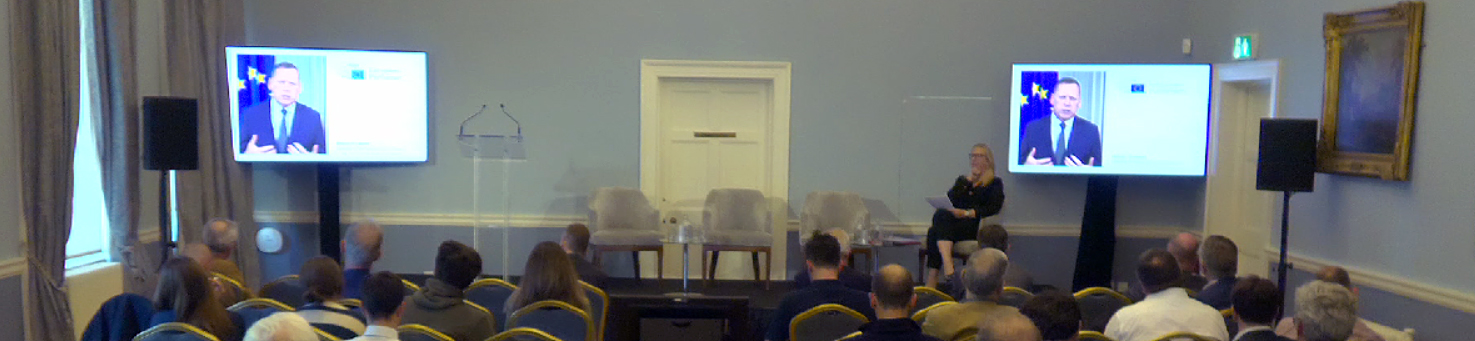
On the budget, he said proposed cuts of over 20% to the CAP were unacceptable, and increased defence spending must be matched by equivalent commitment to food security. On the CAP negotiations, his approach was evolution not revolution, building on the current framework.
Turning to the livestock sector, he highlighted an 8% decline in EU cattle numbers between 2014 and 2024 as a warning sign and called on the forthcoming livestock and protein strategies to reverse it. “The next CAP must focus on support where it’s needed most, and the farms are under the most pressure and on keeping them viable.”
He closed by capturing the mood of the day: “Exporting emissions so we can import food helps no one. We need to produce high quality, sustainable food at home and we need to pay farmers properly for having done that. The era of asking farmers to do more for less has to end with this Common Agricultural Policy.”
Rose concluded the day with an invitation to join the next Regional Forum in Vilnius on November 25, 2026 to continue the discussions