
2026: Summary of breakfast meeting, European Parliament Strasbourg, 9 July 2026
Friday, Jul 17, 2026
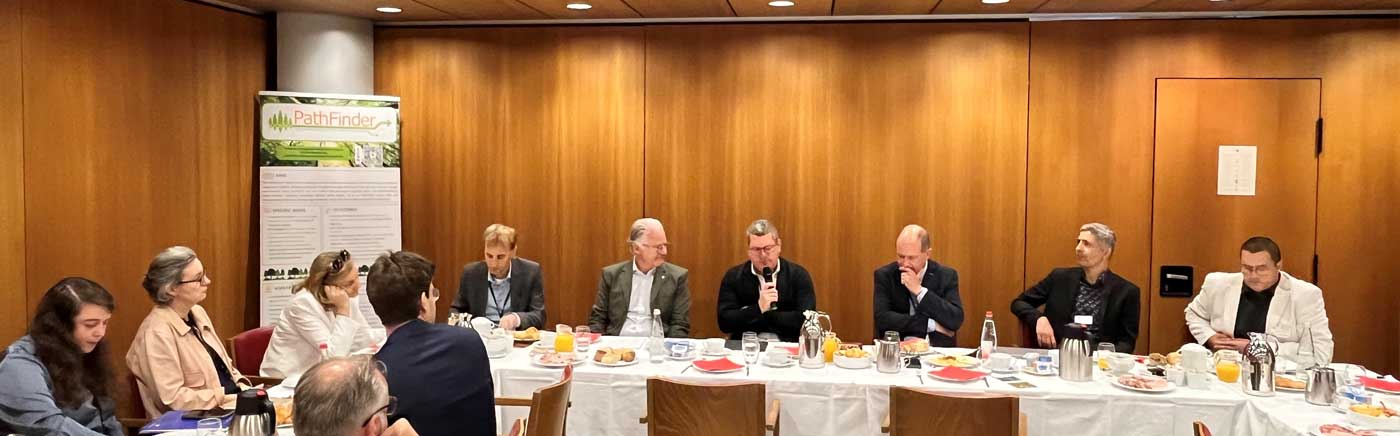
The European Landowners’ Organization (ELO) organised a breakfast meeting under the European Parliament’s Biodiversity, Hunting and Countryside Intergroup, hosted by MEP Stefan Köhler in Strasbourg, to discuss how the bioeconomy can strengthen Europe’s rural resilience and strategic autonomy, with a particular focus on the contribution of the Horizon Europe PathFinder project. The event brought together representatives from the European Parliament, industry, landowners’ organisations, research institutions and other key stakeholders, fostering an active exchange of views on the future of Europe’s bioeconomy and forest monitoring.
Opening the event, MEP Stefan Köhler (EPP, AGRI/ENVI) emphasised that the bioeconomy offers Europe a unique opportunity to build a competitive economic sector that combines sustainability with economic growth. He stressed that its success will depend on placing farmers and forest owners at the centre of bio-based value chains, ensuring they remain active participants in value creation rather than merely suppliers of raw materials. While innovation is already delivering a wide range of bio-based products and processes across Europe, he argued that the priority is now to scale up deployment through greater investment, less bureaucracy and a more innovation-friendly regulatory framework. Calling on the forthcoming EU Bioeconomy Strategy to identify and remove existing barriers, he also highlighted the importance of the announced Biotech Act II in accelerating permitting procedures, improving access to finance and creating the conditions needed for Europe to unlock its full potential as a global leader in bio-based innovation.
The Horizon Europe PathFinder project, coordinated by Johannes Breidenbach (Norwegian Institute of Bioeconomy Research – NIBIO), presented its vision for a bottom-up European Forest Monitoring System combining National Forest Inventories with remote sensing to deliver harmonised, annual and high-resolution forest data. Such a system would provide a stronger evidence base for policymaking on carbon stocks, biomass, forest health and the sustainable use of forest resources. While technically feasible, its success will depend on stronger governance, Member State commitments to share data and closer institutional coordination.
Speaking on behalf of AGPB, David Vincent highlighted the strategic role of the cereal sector in Europe’s bioeconomy, arguing that sustainably produced biomass should be recognised as a key resource for achieving the EU’s climate, energy and competitiveness objectives. He emphasised the contribution of first-generation biofuels to greenhouse gas reductions and the circular economy through valuable co-products, and called for an ambitious Bioeconomy Strategy that encourages investment, expands markets for sustainable biomass and recognises farmers as central actors in Europe’s bio-based economy.
Representing Familienbetriebe Land und Forst, Max von Elverfeldt argued that the bioeconomy must be built around the farmers and forest owners who manage Europe’s land. Given the long investment cycles in forestry, he stressed the need for predictable and coherent policies, regulatory certainty and functioning markets that encourage investment, create added value in rural areas and fully integrate land managers into bio- based value chains.
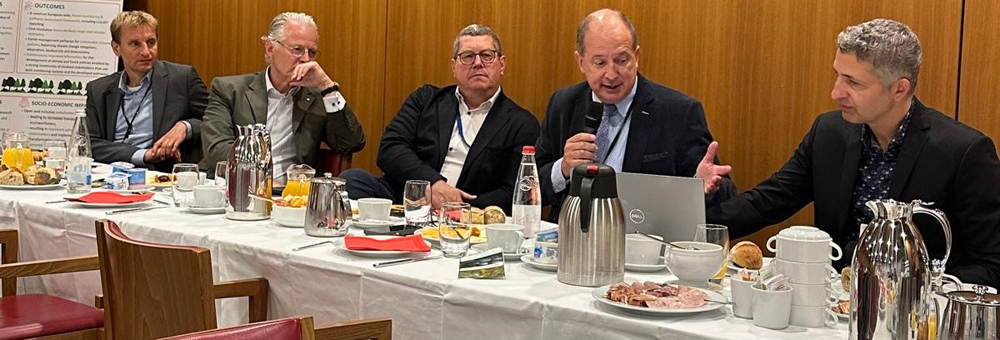
Hinse Boostrat (Bayer) underlined that a strong bioeconomy is essential to decarbonise sectors such as construction, transport, chemicals and energy while supporting agricultural adaptation to climate change. He argued that policy incentives will be needed to overcome the competitive advantage of fossil-based products and called for a more pragmatic regulatory framework enabling farmers to access innovative technologies, alongside open international trade to secure sustainable biomass supply.
The European Bioeconomy Industry Consortium (EBIC) stressed that the forthcoming Bioeconomy Strategy should provide a strong and ambitious framework to strengthen Europe’s competitiveness, resilience and strategic autonomy. EBIC called for greater regulatory coherence across EU legislation and policy initiatives to create a predictable and enabling framework for innovation, investment and market uptake. It also highlighted the need to scale up industrial deployment and remove barriers to commercialisation so that innovative biological solutions can contribute to more resilient and competitive agriculture.
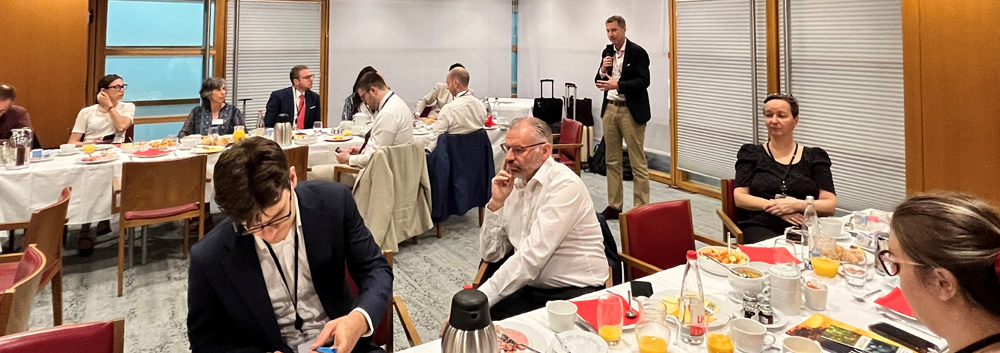
The discussion that followed focused on strengthening the competitiveness of Europe’s bioeconomy. Participants agreed that fossil-based products continue to enjoy significant economic advantages, while bio-based solutions are often held back by fragmented and sometimes contradictory EU legislation. A recurring message was that the bioeconomy is politically encouraged but too often constrained in practice, underlining the need for a more coherent, pragmatic regulatory framework that supports innovation, investment and large-scale deployment. The lively discussion reflected broad interest among participants from EU institutions, industry, landowners’ organisations and the research community, who exchanged perspectives on the policy, scientific and market conditions needed to unlock the full potential of Europe’s bioeconomy.
The event highlighted the importance of initiatives such as the Horizon Europe PathFinder project in supporting evidence-based policymaking through harmonised forest information. By improving the availability and comparability of forest data across Europe, PathFinder is helping to underpin the implementation of future EU Bioeconomy policies and to enable informed decision-making on the sustainable management of forest resources.

The research leading to these results has received funding from the European Union Horizon Europe (HORIZON) Research & Innovation programme under the Grant Agreement no. 101056907. This output reflects only the authors’ view, and the European Union cannot be held responsible for any use that may be made of the information contained herein.