

Ireland: A land shaped for farming
Friday, May 15, 2026
As we move to Ireland for the next Forum for the Future of Agriculture Regional Event on Tuesday, June 2, we take a look at the importance of agriculture to Ireland and why it is well placed to host our upcoming event.
Ireland’s agricultural sector is deeply rooted in the country’s natural environment, history, and rural traditions. Fertile soils, a mild temperate climate and plentiful rainfall provide ideal conditions for farming. Influenced by the Gulf Stream, Ireland’s climate is especially suitable for growing ryegrass, a low-cost and highly nutritious feed for livestock, an important sector. This natural advantage continues to shape much of Irish farming today.
There is a long-standing tradition of livestock management and crop production that has been passed down through generations. Evidence of this heritage can be seen in north Mayo, where the remains of a 5,000-year-old Stone Age farming settlement survive beneath blanket bogland. Archaeological research shows that these early farmers worked collectively to clear forests, divide land into fields, and raise cattle, demonstrating a remarkably organised agricultural society.
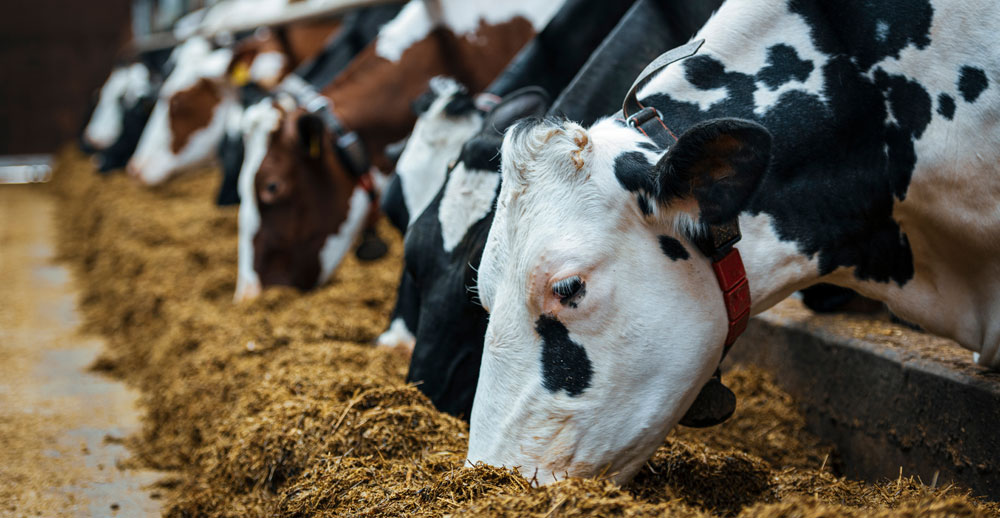
Today, beef and dairy farming are the dominant sectors of Irish agriculture. Ireland’s agri-food industry is strongly export-oriented due to the relatively small domestic population of around four million people.
According to the Irish Food Board, “the total value of primary beef exports in 2025 is estimated at €3.4 billion, up 24% on 2024.” In addition, “Irish dairy exports were valued at a record €7.3 billion in 2025, representing an increase of 14% versus 2024. Over 1.6 million tonnes of product shipped to approximately 140 markets worldwide. Underpinning this value growth was a strong performance at farm level, with the Central Statistics Office (CSO) reporting milk collections on track for a record year of approximately 8.8 billion litres. Good weather conditions in the spring and summer months supported grass growth during the critical peak milk period and contributed to collections.”
Agricultural activity varies across Ireland according to soil quality and landscape. Dairy farming and tillage enterprises, which require fertile soils and flatter land, are mainly concentrated in the east and south of the country. In contrast, sheep and beef farming are more common in the west and north. Despite these regional patterns, most farming enterprises can be found in nearly every county.
The agri-food sector remains a major contributor to the Irish economy. According to the Annual Review and Outlook for Agriculture, Food and the Marine 2024-2025, “Irish agri-food exports achieved a record value of €19 billion in 2024, a 5% increase by value on 2023 and representing a 65% increase since 2014, reaching over 190 markets worldwide, and accounting for 8.6% of Irish goods exported.” It also highlights that “the United Kingdom remains the top destination for Irish agri-food exports by value (38%, €7.3 billion), followed by the EU (34%, €6.5 billion) and Rest of World markets (28%, €5.3 billion).”
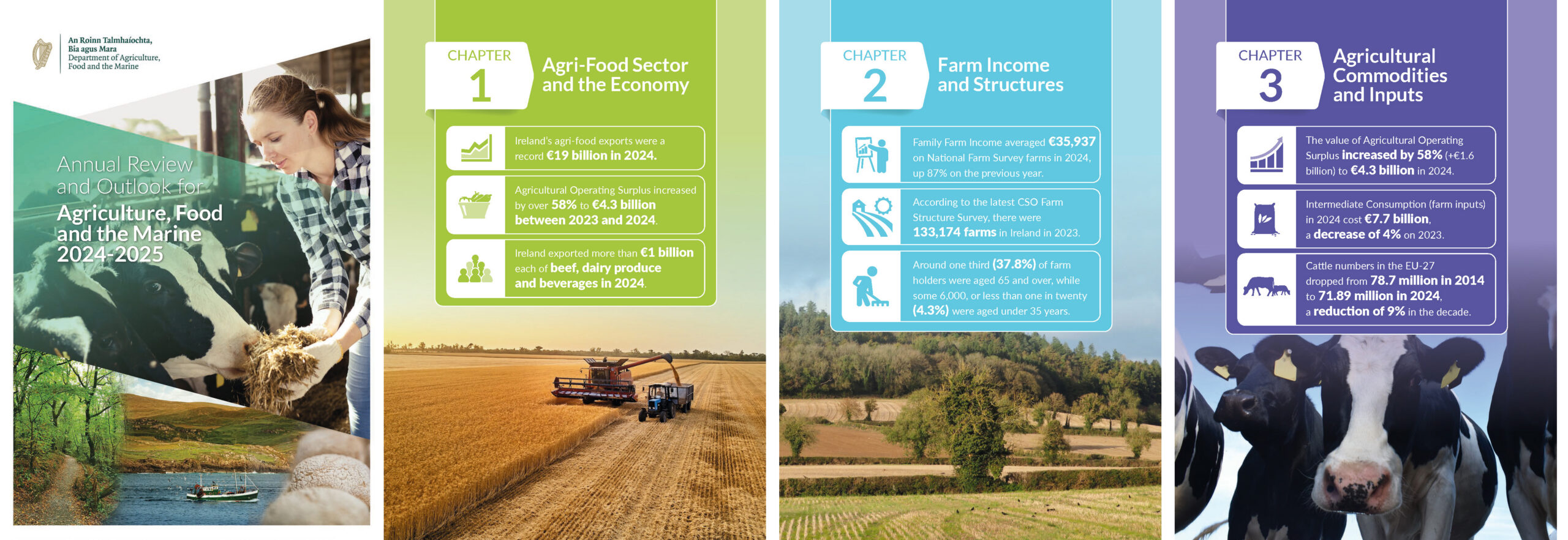
Commenting on the report, Minister for Agriculture, Food and the Marine, Martin Heydon said “In 2024, agri-food exports reached a record €19 billion, an achievement which is a testament to the dedication of our farmers and fishers, food producers, processors, manufacturers and distributors. The Irish agri-food sector has once again demonstrated its resilience, innovation and adaptability and continues to develop new market opportunities and thrive on the world stage.”
The Minister concluded “In 2024, over 169,300 people were employed in the sector across 133,000 farms, 2,000 fishing vessels & aquaculture sites and over 2,000 food production and beverage enterprises. The sector is responsible for 4.6 million hectares of agricultural land and over 808,000 hectares of forestry, representing some 76% of the total land in the State. Our people are critical to our ambition for Ireland to be a “A World Leader in Sustainable Food Systems”, as outlined in Food Vision 2030, prioritising not only economic, but also environmental and social sustainability.”
We look forward to seeing you in Dublin on Tuesday, June 2.