
Advancing soil health across Europe: Business models, incentives and policy pathways for a sustainable transition
Event summary
Friday, Oct 30, 2026
This one-day event held in Brussels, brought together researchers, policymakers, farmers, and industry representatives to discuss the implementation and scaling of soil health business models across Europe. The event showcased findings from two major EU-funded projects—InBestSoil and Soil Values – which have spent four years developing and testing innovative approaches to sustainable soil management.
Across three main sessions, participants explored practical experience, policy recommendations and opportunities to expand successful approaches. A central message emerged: improving soil health requires shared responsibility, with farmers supported by supply chains, public authorities, financial institutions and communities.
Opening keynote
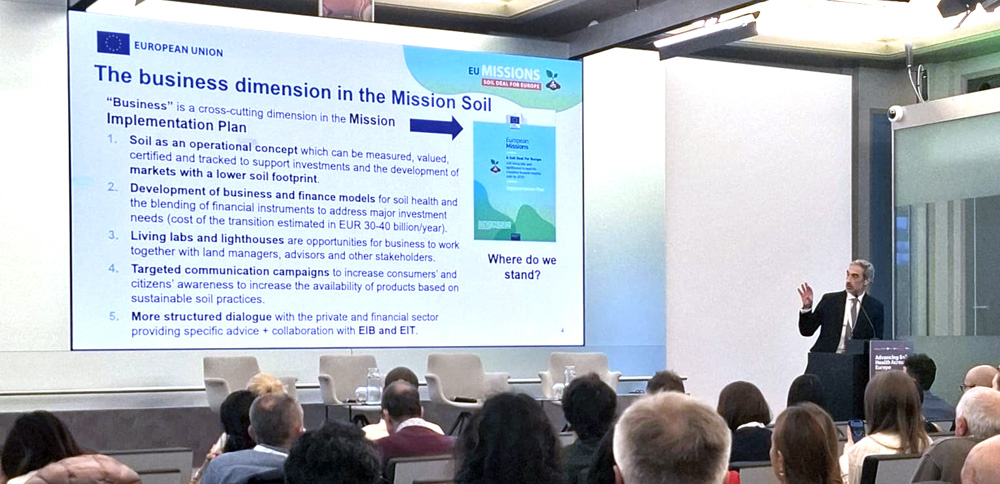
Opening the event, Luis Sánchez from the European Commission’s DG AGRI placed the projects within the wider Mission Soil programme. He highlighted living labs, collaboration between projects and efforts to connect research with investors. The mission’s ambition extends beyond generating knowledge: its success depends on the adoption of sustainable practices and measurable improvements in soil health. Business models, incentives and investment must therefore create the conditions for research findings to become lasting changes in land management.
Session 1: Soil health business models: From concept to practice
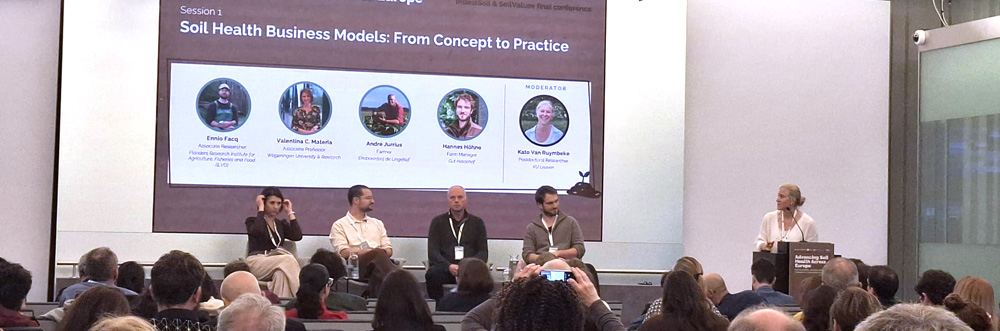
The first session examined how business models develop in practice. InBestSoil presented a collaborative approach that recognises the multiple values of healthy soils, including production, water retention, biodiversity, cultural heritage and community benefits. These values cannot all be expressed through market prices. Its research emphasised that farms and other land management businesses operate within wider social, economic and ecological systems. Developing an appropriate business model consequently involves understanding local circumstances, identifying stakeholders, agreeing objectives and adapting through experimentation and learning.
SoilValues reinforced these findings through its testing grounds, distinguishing community networks, circular resource networks and relationships within agricultural value chains. Although their activities differed, common requirements included trust, knowledge, long-term commitment, finance and supportive institutions. Farmers stressed that environmental ambition must coexist with a viable livelihood. Personal motivation and peer learning can encourage change, but cannot consistently compensate for weak markets or transition costs. Participants also questioned short project cycles, arguing that partnerships need time to mature and should have credible continuation strategies beyond research funding.
Session 2: Financing the transition: Incentives and investments for soil health
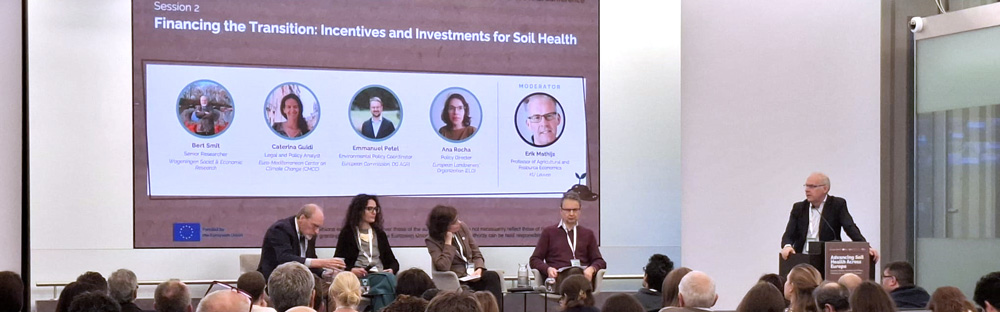
The second session presented joint policy recommendations from the projects. These called for common European objectives combined with flexibility for regional conditions, stronger coordination between policy areas and fairer sharing of costs, risks and benefits. Recommendations also highlighted independent advice, farmer participation, proportionate monitoring and responsible data governance. Support should recognise existing good stewardship as well as improvements, while avoiding administrative requirements that disproportionately exclude smaller farms. Public intervention remains important where benefits are shared by society or cannot appropriately be monetised.
Financing discussions focused on the gap between immediate expenditure and benefits that may emerge only over many years. Blended finance was considered useful when public and private resources address genuine financing gaps and transition risks, rather than becoming an objective in itself. Participants advocated combining payments for verified practices with outcome-based rewards where measurement is credible and affordable. They cautioned against transferring weather-related risks to farmers. Research on potential management changes showed that improvements in soil health, ecosystem services and profitability can coincide, but such gains are not guaranteed.
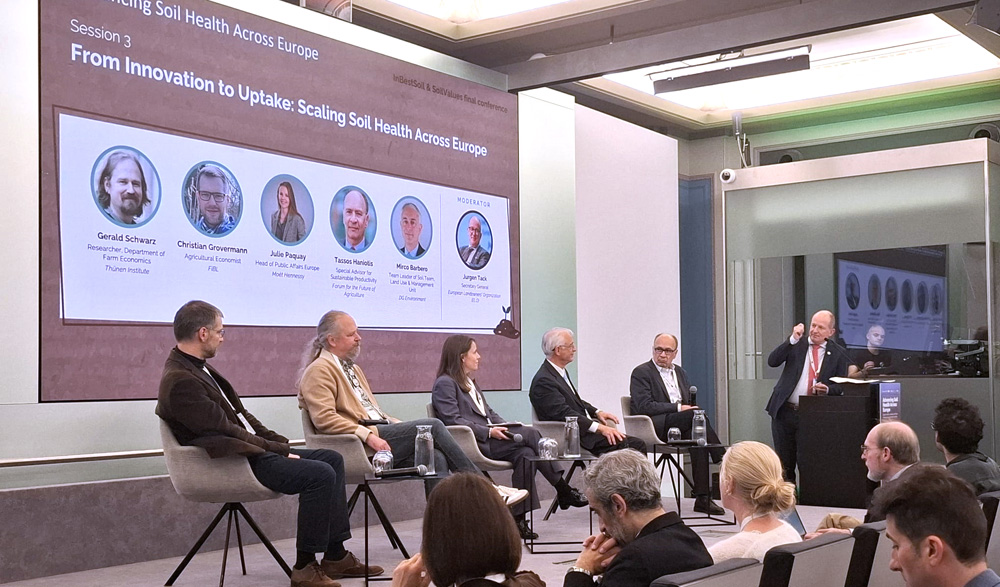
Session 3: From innovation to uptake: Scaling soil health across Europe
The final session considered how initiatives can achieve wider impact. Speakers argued that expansion means more than increasing the size or number of individual projects: it can involve stabilising existing activities, strengthening institutions, spreading knowledge and changing cultural expectations. Examples highlighted the importance of local authorities, secure land tenure, community infrastructure and public procurement. Evidence from Switzerland demonstrated opportunities to target incentives towards land facing the greatest degradation risks. A carbon farming pilot also illustrated unresolved questions around measurement costs, variability and the permanence of stored carbon.
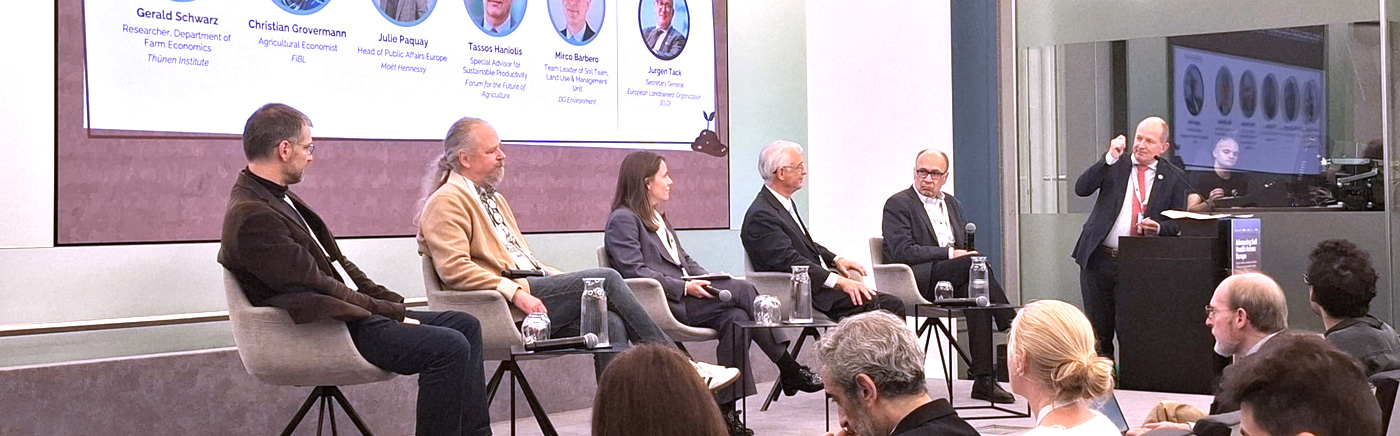
The business perspective showed how companies can support suppliers through technical advice, demonstration sites, certification and financial incentives. Julie Paquay from Moët Hennessy described its work with winegrowers and emphasised the importance of protecting soils in regions where production is tied to specific locations. However, participants recognised that premium products offer circumstances that cannot simply be replicated across commodity agriculture. Limited consumer willingness to pay more for soil health, fragmented voluntary markets and uncertain demand for environmental credits remain substantial obstacles. Public policy and supply-chain commitments therefore remain essential.
Closing reflections
Closing reflections identified resilience as the strongest long-term rationale for investing in soil health, particularly as climate pressures threaten production. Collaboration and facilitation should be treated as essential investments, with support sustained beyond individual projects. While the projects had advanced understanding of soil’s value and built partnerships, further work was needed to mobilise investment, reward land managers and establish durable markets.
The event concluded that progress depends on locally appropriate solutions, credible evidence and coordinated policies that make healthier soils both achievable and economically sustainable.